Russia strikes Ukraine’s energy network again as Kyiv death toll rises to four
President Volodymyr Zelenskyy says the October 14 attacks damaged 30 energy facilities and left at least 600,000 people without electricity. The terms of Trump’s announced energy ceasefire remain unclear.
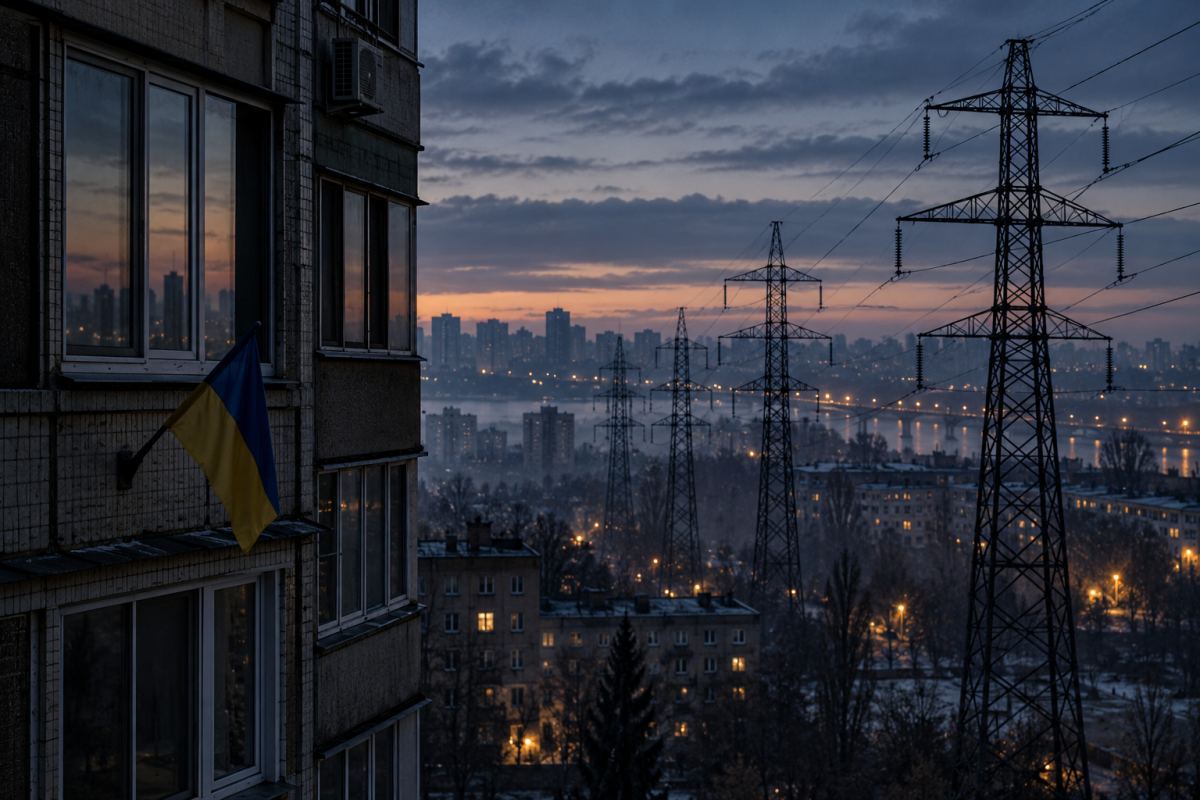
The energy ceasefire announced by President Donald Trump again fell short of events on the ground Wednesday. Russian attacks on Kyiv, Kharkiv and other parts of Ukraine damaged 30 energy facilities and left at least 600,000 people without electricity, Ukrainian President Volodymyr Zelenskyy said. In the capital, Ukrainian news agency Ukrinform reported an updated toll of four dead and 27 injured, citing prosecutors and police.
The toll increased during the morning. Reuters had initially reported three deaths. The Ukrainian update included three women killed in the Desnianskyi district and one person in Holosiivskyi. Authorities were still determining the full extent of casualties and damage from attacks that began Tuesday evening and continued into Wednesday morning.
For residents, the diplomatic dispute has an immediate consequence: another interruption to power as winter approaches. For Washington, the attacks raise a question the president’s announcement did not answer: what specific commitments did the two sides accept, and how would compliance be verified?
Homes damaged and hundreds of thousands without power
A nine-story residential building in Desnianskyi was hit. Fire damaged apartments on the first through eighth floors, and windows were blown out in a nearby building, according to the prosecutors’ account carried by Ukrinform. A seven-year-old girl was among the injured, with cuts and burns to an arm.
Police were also documenting damage to houses, cars, an office building, a coffee shop, a library, a stadium and a school. That list shows how an offensive discussed in terms of infrastructure also reaches the ordinary spaces of city life. Rescuers, medical personnel and police continued working at the affected sites.
Zelenskyy’s figure of at least 600,000 people without electricity is his assessment of the attacks’ impact. It is not a count of destroyed homes and does not establish how long outages will last. A damaged energy facility is not necessarily a generating plant: the system also includes equipment and networks with different roles.
Power cuts add to the demands of evacuation and repair. Restoring electricity is essential to urban services, while making a residential building habitable also requires assessing structural and other damage. Those tasks can proceed at different speeds, even after the air raid alert ends.
An announced pause without clear public terms
Trump said Sunday, October 11, that Russia and Ukraine had agreed to stop attacks on energy infrastructure immediately. His announcement did not provide a detailed agreement, a monitoring timetable or a public procedure for handling allegations of violations.
Kyiv welcomed the prospect of de-escalation but requested details. Zelenskyy subsequently said Ukraine was prepared to stop attacking Russian facilities if Moscow stopped striking Ukrainian ones. Reciprocity was central to the position he set out, including in remarks to the Warsaw Security Forum.
The Kremlin had said contacts were continuing without publicly confirming the ceasefire’s terms. The distinction matters: a president can announce an agreement, but protecting civilians requires both sides to accept and implement the same obligations.
On Tuesday, Reuters reported that the Russian offensive described that day had not hit energy targets, although transport and logistics were attacked. That limited pause was not enough to establish that the suspension was holding. The next offensive again placed the energy system at the center of the damage.
The war extends beyond power plants
Russia’s Defense Ministry said Wednesday that it had struck four power plants in and around Kyiv and two in Kharkiv, Reuters reported. That is Moscow’s account of its operations, rather than Ukraine’s damage inventory. The two tallies cannot simply be added together as though they measured the same thing.
Ukrainian Prime Minister Sergii Koretskyi also reported attacks on railway facilities in five regions. Pressure on transport can complicate travel and supply distribution, alongside the military uses of rail networks. A pause that excluded only certain energy targets would leave broad areas of the war untouched.
European Union foreign policy chief Kaja Kallas had argued Monday that reducing attacks should also protect people. Her point identifies the limits of a sector-specific truce: sparing power stations or refineries would matter, but it would not by itself amount to a comprehensive ceasefire.
What would have to change for a truce to work?
Zelenskyy criticized the attacks as a show of disrespect toward the American effort. Ukraine has also stressed the need for outside support, and the president discussed damage in Kyiv and forthcoming diplomatic contacts with Canadian Prime Minister Mark Carney.
Wednesday’s developments do not establish that negotiations have ended. They do prevent an energy ceasefire from being described as effective while energy attacks continue. Assessing progress will require identifiable obligations, confirmation from both sides and sustained evidence on the ground.
For now, the clearest measures remain in the cities: residents evacuated, buildings requiring repairs and utilities that must be restored. The distance between the announcement and a return to ordinary life is the problem diplomacy has yet to resolve.