Vienna and its museums: eight ways to read a city
From the Habsburgs’ crowns to Klimt’s gold and Schiele’s restless bodies, Vienna’s museums tell a story that moves from imperial splendor to the need to question it.
Vienna has a distinctive way of preserving the past: it turns it into a conversation. Its museums let us trace a dynasty’s history and, soon afterward, encounter artists who challenged the conventions of their time. Between those extremes emerges a city that learned to display its grandeur, but also to examine its contradictions.
The temptation is to reduce it to a postcard of palaces and gilded paintings. That Vienna exists, yet it explains only part of the journey. The collections reveal other scales: the intimacy of a portrait, a rural community caught in winter, the fragility of a body, an everyday object that outlived its users. Even a crown becomes more than a jewel once we understand the authority it was meant to embody.
Eight museums offer a way into that diversity without turning the city into a checklist of monuments. What connects them is a question of perspective: who had the power to collect these objects, what they intended them to say, and how their meaning changes when they leave a court’s possession and become available to the public. From the Kunsthistorisches to the Wien Museum, Vienna tells its story in many ways. None is sufficient on its own.
Kunsthistorisches Museum: the world gathered beneath a dome
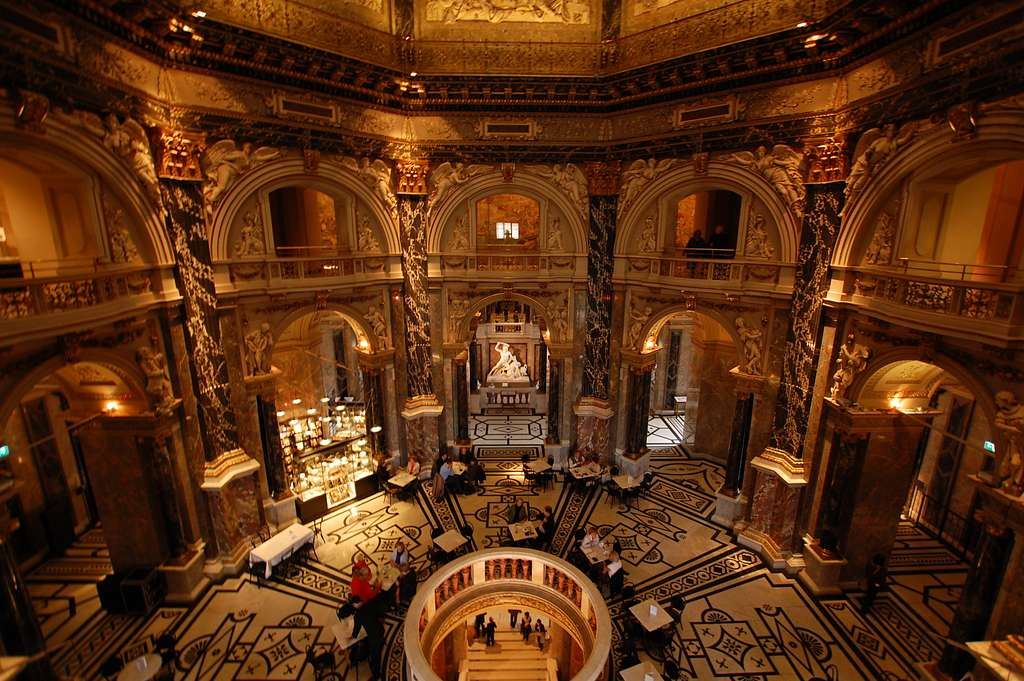
The Museum of Art History preserves one of the great legacies of the imperial collections. Its name may sound academic; the paintings it houses, however, offer stories full of movement, desire and conflict. Representations of power sit alongside observations of lives unfolding far from royal courts.
Pieter Bruegel the Elder offers a particularly revealing point of entry. In The Tower of Babel, an immense construction turns human ambition into a landscape. In Hunters in the Snow, men and their dogs return along a hillside while, in the distance, life continues on the ice. The first painting focuses our attention on a project reaching toward heaven; the second brings it back to the effort of getting home. Both belong to the museum’s collection.
That distance between grandeur and everyday life makes the Kunsthistorisches more than a repository of celebrated works. A collection assembled by those in power can also preserve images that reach beyond their world. In Bruegel, visitors find a realm of work, games, seasons and customs that demands attention to detail. Vienna safeguards those scenes, but the experience of reading them belongs to anyone who recognizes a way of life within them.
Naturhistorisches Museum: a Vienna before Vienna
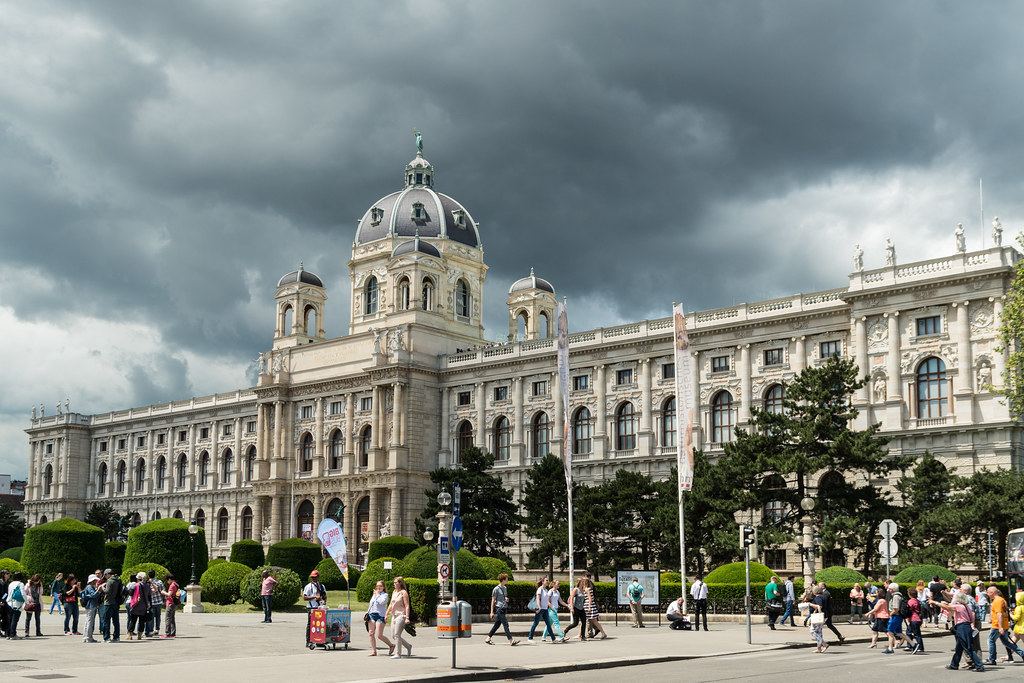
Across from the history of art, the Museum of Natural History expands the scale until any dynasty seems small. Minerals, fossils and meteorites tell of processes that took place long before cities existed. The monumental building retains the language of an age that believed in gathering and classifying the world; its collections allow us to step beyond that framework and consider spans of time no empire could command.
The Venus of Willendorf brings that immensity back to a tiny object. Its figure conveys a human presence that predates crowns, painting galleries and the borders of present-day Austria by thousands of years. Its modern name does not settle what it meant to those who made it. That distance is part of its power: the object survives, but a definitive explanation of the life that produced it does not.
Meteorites introduce another kind of strangeness. They are matter that arrived from beyond Earth, now arranged inside an urban museum. The journey thus changes the initial question. It is no longer only about what Vienna did with its past, but about how a city tries to understand a world far older and larger than itself.
The Imperial Treasury: when a crown made a case for power
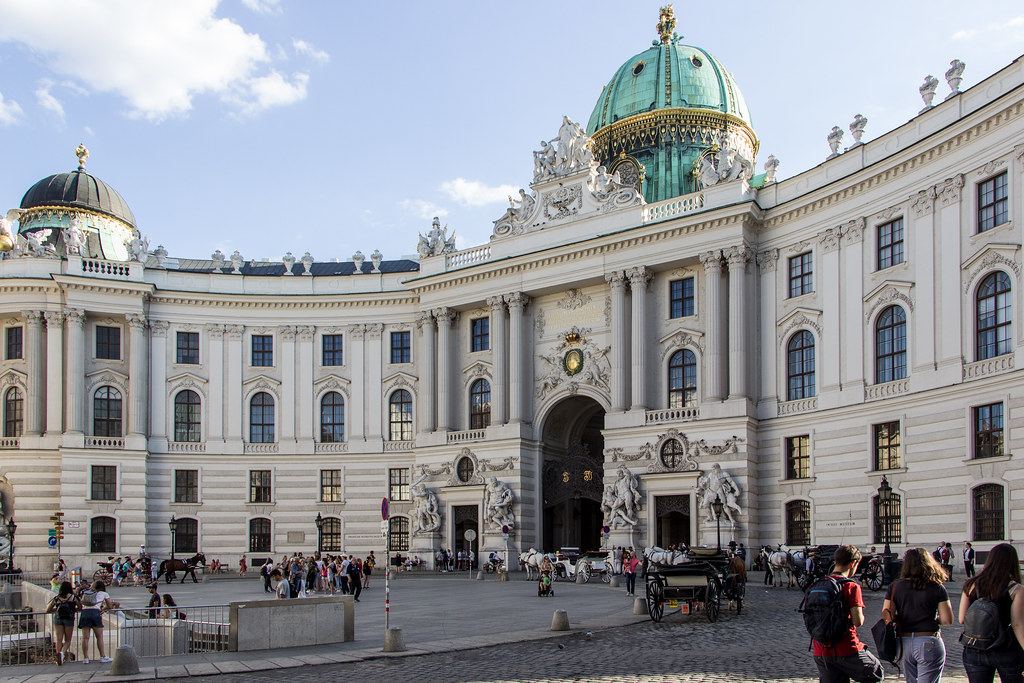
At the Hofburg, the Imperial Treasury preserves objects whose value cannot be explained by their precious stones alone. The crown of the Holy Roman Empire, the insignia of power and Rudolf II’s crown—which later became the crown of the Austrian Empire—belong to a political language in which rule had to be made visible.
A crown set its wearer above everyone else. Vestments, emblems and ceremonial objects helped present authority as continuous, legitimate and exceptional. By bringing them together, the museum lets us examine how that idea took material form. The glitter draws the eye first; then come questions about what it was meant to justify and whom it was intended to address.
The collection also holds objects once credited with extraordinary properties: a narwhal tusk thought to be a unicorn’s horn, and an agate bowl associated with the Holy Grail. Today they can be read as evidence of the mixture of knowledge, belief and prestige that accompanied court collecting. Vienna’s imperial past takes a tangible form here: small, carefully protected objects carrying meanings far greater than their size.
Source for this section: AerialViews — Imperial Treasury Vienna.
Belvedere: Klimt’s gold and modern intimacy
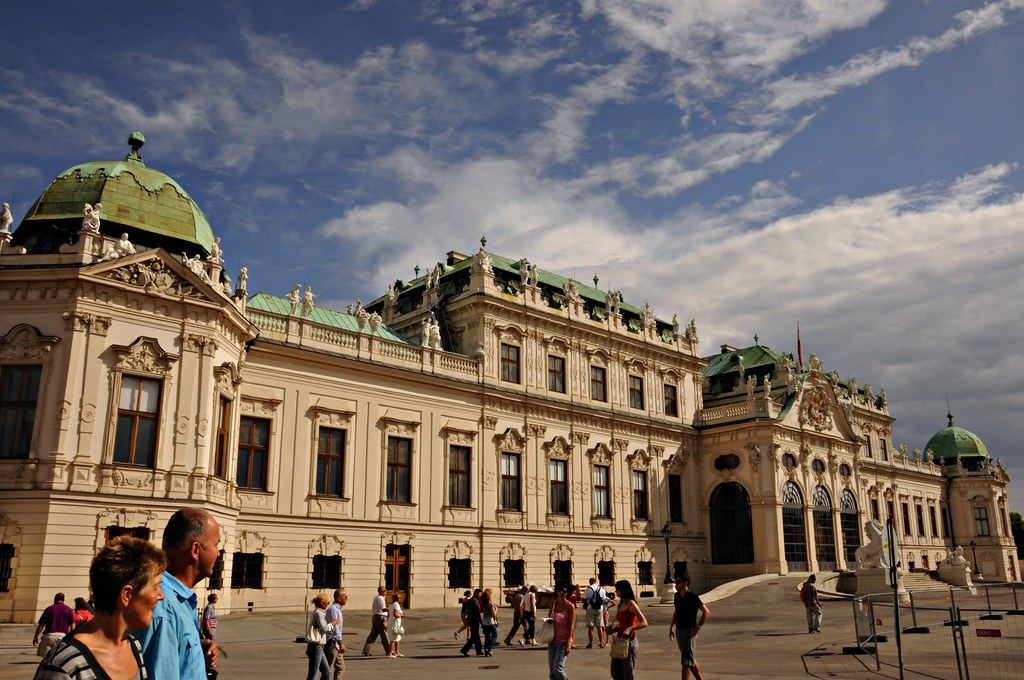
The Belvedere preserves a tension that defines much of Vienna’s cultural appeal: a palatial setting houses paintings that changed how intimacy was represented. Its collection traces Austrian art, with Gustav Klimt as one of its focal points.
The Kiss has circulated in so many reproductions that it can feel familiar before we even look at it. Yet recognizing an image is not the same as reading it. The embrace, the faces and the hands coexist with an ornamental surface enveloping the couple. Geometric forms and gold do not erase the human gesture: they surround it, make it precious and separate it from the everyday world.
The Klimt collection invites us to look beyond that icon. His portraits reveal how painting negotiated between a person’s identity and a new decorative freedom. In modern Vienna, art could remain connected to social prestige while exploring a sensuality that unsettled its age.
The Belvedere helps us understand that change without reducing it to a celebration of luxury. The city of ceremonies was also producing images of desire, individuality and an inner life that was difficult to contain within formal conventions.
Albertina: learning to look differently
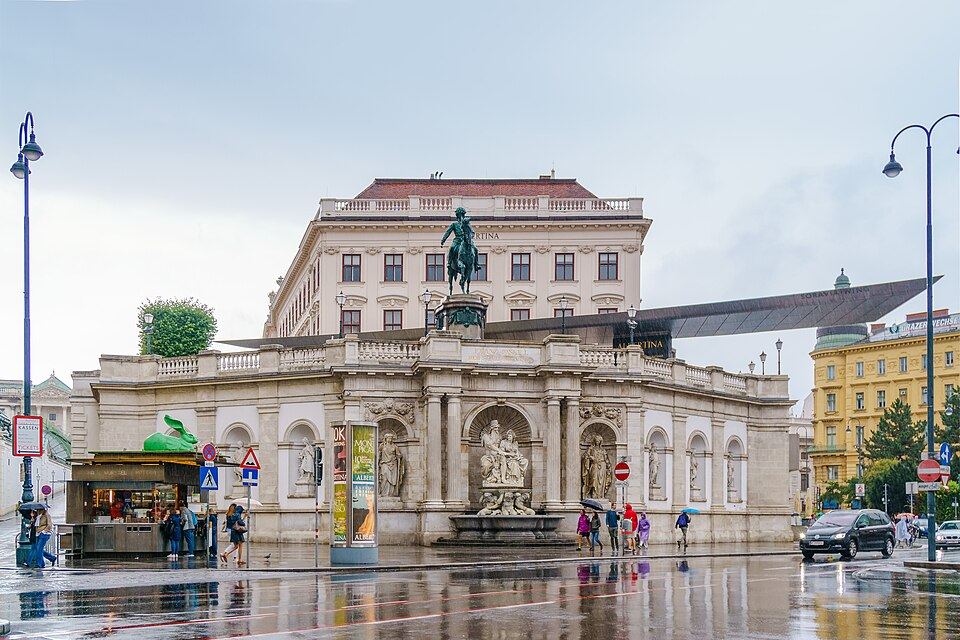
The Albertina shifts the journey toward a history of visual transformation. The Batliner Collection brings together works that trace paths through modern painting, from Impressionism to different avant-garde movements. Monet, Chagall and Picasso are part of that conversation, although the interest lies less in accumulating famous names than in noticing what changes from one work to another.
In Monet, light and color can dissolve a landscape’s apparent stability. In Picasso, the figure no longer depends on a single way of arranging its forms. Between those extremes, the relationship between what is visible and how it is represented changes. A painting can show a place while questioning what it means to see it.
That experience gives the Albertina a distinctive place among Vienna’s museums. After the imperial insignia and the great court collections come works that ask viewers to reconsider their habits. Painting becomes a space for experimentation, and our way of looking must follow.
Vienna then ceases to seem like a city concerned only with preservation. It also becomes a place from which to follow the disagreements and discoveries that made modern art an open-ended story, moving in many directions.
Leopold Museum: the restless bodies of another Vienna
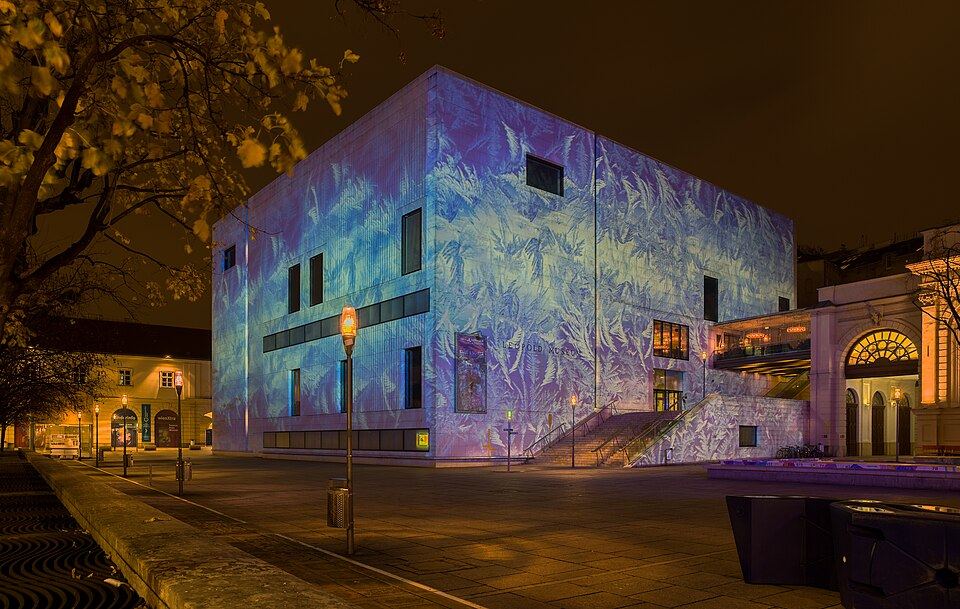
The Leopold Museum offers a counterpoint to Klimt’s more familiar brilliance. Its Egon Schiele collection and its focus on Vienna around 1900 bring visitors closer to a modernity marked by unease, personal exploration and conflict with convention.
In Schiele, the body rarely settles into reassuring beauty. Tense poses and the intensity of the drawing turn portraiture into a question about identity. His self-portraits do not offer a stable image of the artist; they show someone observing and representing himself, trying out ways of saying who he is. Vulnerability is not concealed behind a solemn pose.
The museum places that painting within a wider world, where art intersected with new debates about individual life and a desire to bring design into everyday objects. Works from the Wiener Werkstätte remind us that renewing visual culture could also mean reconsidering a chair, a lamp or a decorated surface.
Imperial Vienna and modern Vienna shared streets, but not a single worldview. At the Leopold, their coexistence loses its appearance of harmony and reveals tensions that remain recognizable: between public image and private experience, between tradition and the wish to change it.
mumok: the museum that keeps the debate alive
The mumok takes the journey beyond the more familiar aspects of Viennese modernity. Its collections bring together different stages of modern and contemporary art, with a substantial presence of avant-garde movements from the second half of the twentieth century and Viennese Actionism. Painting and sculpture share space with photography, video, film and installations.
The change in media also changes the audience’s position. There is not always a painting to contemplate from a comfortable distance. An installation may require moving through a space; a video work introduces an experience of time; the record of a performance preserves something that happened with a body and cannot be fully contained within the traditional form of an art object.
That shift is significant in a city so closely associated with preservation. A museum can safeguard works that question institutions, rituals and the boundaries between art and life. The contradiction is part of the experience: a rupture eventually becomes something studied, preserved and passed on to new generations.
The mumok keeps Vienna from becoming fixed in the image of an imperial capital or in the prestige of its turn-of-the-century culture. The story of its museums continues wherever art is still debating how it should be viewed and what deserves to occupy a public space.
Wien Museum: returning the city to its inhabitants
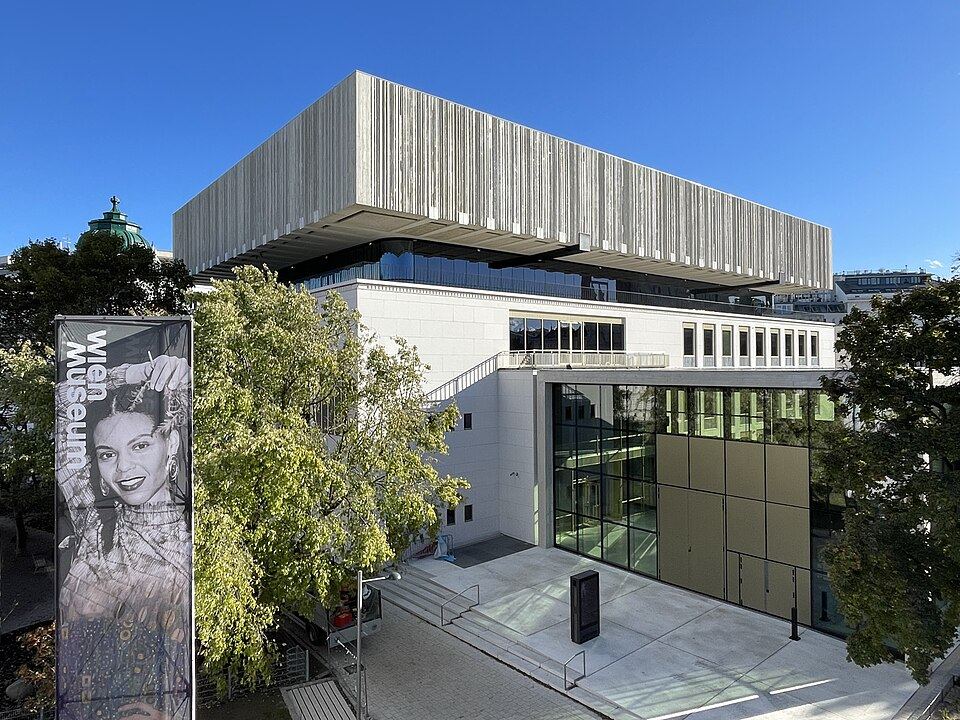
The Wien Museum changes the point of view again. The city is no longer the setting in which great collections accumulate; it becomes the subject of the journey. Its exhibition on Vienna’s history connects urban transformation with the lives of those who inhabited it.
A model of St. Stephen’s Cathedral, Klimt’s portrait of Emilie Flöge and objects associated with the Prater let us move between different scales. Architecture, painting and the memory of leisure are part of the same urban history. What seemed to belong to separate worlds comes together again: a monument everyone recognizes, a person depicted by a celebrated artist and the places where the city enjoys itself.
The museum thus offers a different ending from a gallery of treasures. A capital cannot be explained only by its exceptional possessions. It must also be understood through what it remembers, how its spaces change and the objects its inhabitants valued.
After the emblems of power and the debates of art, the Wien Museum brings our attention back to Vienna. The collections cease to seem like islands and become parts of a city that builds, revises and shares its memory.
The eight journeys reveal continuity, but also its fractures. The Imperial Treasury shows how authority was represented; Bruegel preserves lives lived far from it; Klimt and Schiele raise questions about intimacy; the mumok extends the debate about art; the city’s museum brings those perspectives together again in an inhabited space.
Vienna offers no single answer about its past. Its museums preserve enough objects, images and disagreements to resist one. Perhaps that is why the journey does not end when we leave a gallery: it continues in the way we look at the city, with less faith in postcards and more attention to the stories behind them.