UK inflation rises to 3.5% as fuel prices complicate the interest rate outlook
Inflation accelerated in September, moving further above the Bank of England’s target. Higher fuel costs were accompanied by stronger services inflation, with the next interest rate decision still to come.
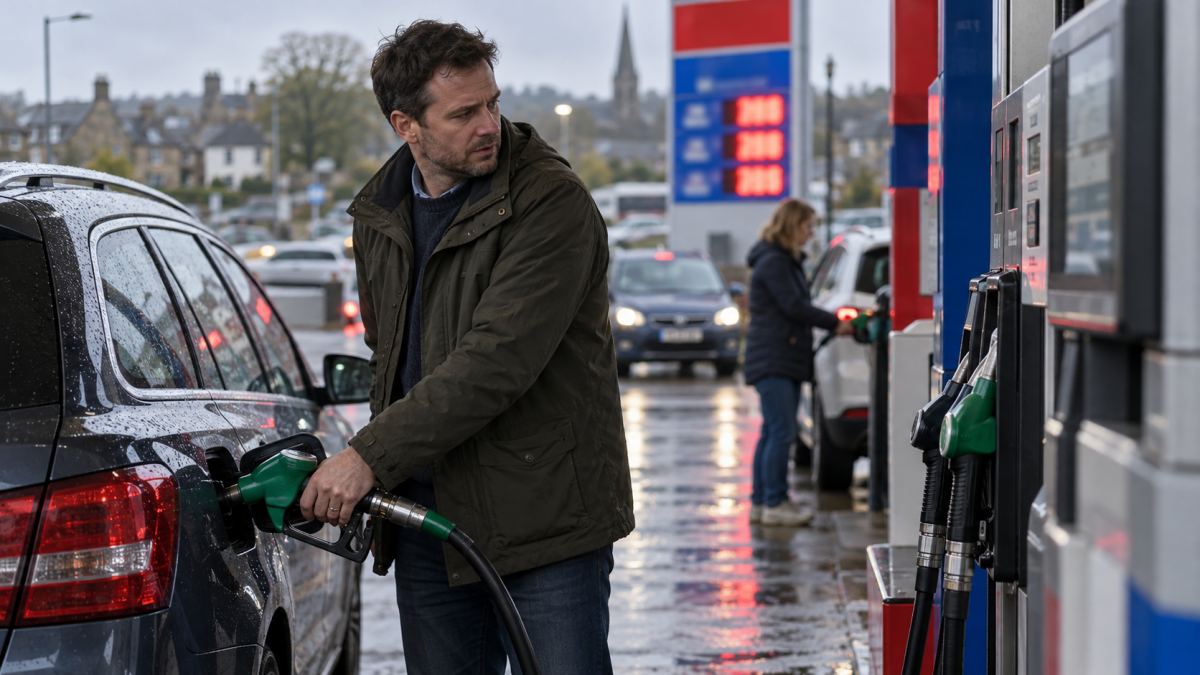
UK annual inflation rose to 3.5% in September from 3.1% in August, according to figures released on Wednesday, October 21, by the Office for National Statistics. It was the highest rate since October 2025. Fuel was again the main driver of an increase that makes easing the cost of living—and the Bank of England’s policy decisions—more difficult.
The figure exceeded the 3.4% median forecast in a Reuters survey of economists. The significance lies less in that tenth of a percentage point than in the direction of travel: inflation is accelerating again as monetary policymakers work to bring it back to 2%. A November rate increase remains a possibility, rather than a decision already taken.
The pressure starts at the pump
The ONS recorded an increase of 8.2 pence per liter in gasoline prices between August and September, and 10.7 pence for diesel. Both fuels had become slightly cheaper over the same month a year earlier. That more favorable year-earlier comparison helps explain their pronounced effect on the annual inflation rate.
Price increases were not evenly spread. Food and nonalcoholic drink inflation remained at an annual 1.3%, while prices in that category fell 0.2% over the month. The distinction matters when interpreting the average: a rise in the overall index does not mean every product is becoming more expensive at the same pace.
Overall, the consumer price index rose 0.4% from August. That monthly change and the annual 3.5% rate answer different questions: one compares consecutive months; the other compares September with September a year earlier. Mixing them up would turn a report about accelerating annual inflation into an incorrect claim about how much prices have risen in a few weeks.
Inflation is also picking up beyond energy
Core inflation, which excludes energy, food, alcohol and tobacco, increased from 2.6% to 2.8%. Reuters also highlighted a rise in services inflation from 3.4% to 3.7%. Policymakers watch those measures to assess whether a shock that begins abroad is spreading through the domestic economy.
The House of Commons Library explains that services tend to depend more on domestic costs and show more persistent inflation than goods. Their performance therefore fills a gap in an assessment focused solely on oil. It does not, on its own, establish that every business is passing higher costs on to customers.
Distinguishing the source of the problem from its subsequent spread is particularly important for an economy that, according to Reuters, relies heavily on imported natural gas. Energy pressures may originate abroad, but their effects on household budgets, businesses and wage negotiations play out at home.
A divided central bank before the latest figures
At its September meeting, the Bank of England’s policy committee voted six to three to keep its benchmark rate at 3.75%. The three dissenters favored an increase to 4%. The decision, published on September 17, had already warned that the prolonged conflict in the Middle East was increasing inflation risks.
The bank distinguished between energy’s immediate impact and second-round effects, in which the pressure becomes more firmly embedded in prices and wages. It also noted that a weak labor market and restrictive financial conditions could temper that pressure. Its assessment included both forces, rather than a guarantee that interest rates would always need to move in the same direction.
The next decision is scheduled for November 5. Wednesday’s figures add information to that assessment but do not replace the committee’s vote. Nor would a rate increase directly make oil cheaper: monetary policy influences the financing conditions and demand through which households and businesses absorb the shock.
Returning to target does not mean returning to old prices
The previous inflation crisis still casts a shadow. The Commons Library puts the peak of that surge at 11.1% in October 2022. Today’s rate is much lower, but the comparison does not erase the cumulative increase in the price level. Lower inflation means prices are rising more slowly, not that they automatically return to where they started.
The Bank of England points out that the CPI measures a basket of goods and services, rather than the precise experience of each family. Someone who spends a larger share of their income on transportation may face a different squeeze from the one reflected in the average. Spending patterns matter as much as the headline figure.
The 2% target is intended to provide stability for planning, saving and setting prices. The renewed acceleration makes that task harder. For households, the immediate question is how much remains after paying their bills; for the central bank, it is how much of the energy-driven increase will persist once its initial impact fades. The next move in interest rates will depend on that still-unresolved distinction.