AO3 returns after security incident: inside the story archive used by millions of fans
Archive of Our Own came back online on November 15 after more than two weeks out of service. Created by fans, the platform holds millions of works and is still operating with some limitations.
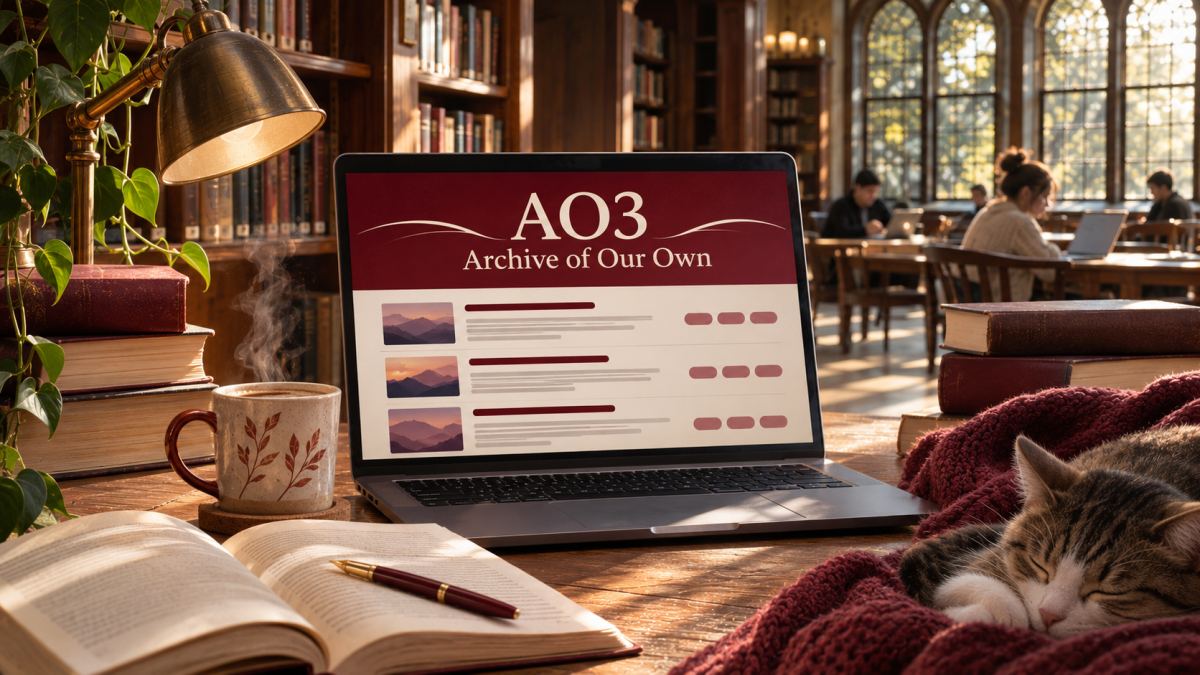
Archive of Our Own, known as AO3, became accessible again on November 15 after an outage that began on October 29 because of a security incident. The platform lets fans of books, television shows, films, video games and other works read and share stories they have created. Its return restores access to an archive that, according to its operators, had surpassed 18 million fanworks by July 2026.
The recovery is not yet complete. The Organization for Transformative Works (OTW), the nonprofit that runs AO3, said it has temporarily disabled icons and the import of external works. Downloads are currently available only in HTML format, and some pages may take longer to load because of heavy traffic.
The organization says works, bookmarks, kudos and drafts were not deleted during the outage. It also said it has no reason to believe the user database was compromised, although it cannot rule out that possibility. As a precaution, it recommends changing AO3 passwords and any passwords reused on other services, and checking that the email address associated with an account is up to date.
What can be found on Archive of Our Own
AO3 is a free, noncommercial archive of works created by fans. Many are fanfiction: stories that take characters, settings or elements from existing works and imagine different situations. A reader might find a story exploring a supporting character, a different relationship or an unofficial continuation imagined by a fan writer.
Communities that gather around a work, an artist or a fictional universe are often called fandoms. AO3 brings together interests as varied as novels, film, television, music and video games. The archive also contains other forms of fan creativity, including illustrations and audio readings of stories known as podfics.
Stories do not become official continuations simply because they use familiar characters. Their appeal lies in the possibilities their creators explore: changing the point of view, developing conflicts the original work barely mentions or imagining its characters in a different setting.
The OTW was created by fans to preserve fanworks and fan culture. AO3 opened to the public in 2009 and, after years in open beta, left that phase in April 2026. The organization relies on volunteers and donations; the archive describes itself as a nonprofit, noncommercial project.
A library organized by its readers and writers
Tags are central to AO3. People who post works can identify the fandom, characters, relationships, age rating and other elements of a story. Readers can search and filter to find what they want to read or avoid subjects they would rather not encounter.
The system also helps people navigate works that are not all described in the same terms. Platform volunteers organize and connect tags so that different expressions can lead to similar concepts. In an archive containing millions of works, this makes stories easier to find without requiring every writer to use exactly the same words.
People with accounts can post works, save bookmarks and follow works, series or creators to receive update notifications. They can also leave comments and kudos, a way of showing appreciation to a creator. Accounts are free. Some creators limit access to their works to registered users.
Registration uses invitations and an automated waiting list. An account provides access to publishing and following tools; reading public works does not necessarily require one. Access to a particular work depends on the settings chosen by its creator.
Why it has become so popular
AO3's size reflects a community that has grown over many years. In June 2026, the platform announced it had reached 11 million registered users, four months after passing 10 million. In July it said it had surpassed 18 million fanworks.
The breadth of the catalog allows readers to find stories about widely known subjects as well as smaller interests. Searches by character, relationship and tag help people navigate that volume. Readers can also follow a story as chapters appear and speak with its author through comments.
Part of the appeal is that the community can create what it wants to read. A story can give more space to a character, imagine relationships absent from the original or explore experiences its writers feel have been overlooked. For some readers, that variety makes the archive a place to find stories and perspectives that do not always take center stage in film, television or publishing.
The project has received recognition beyond those communities. In 2019, AO3 won the Hugo Award for Best Related Work, an honor associated with science fiction and fantasy.
The incident and the features still unavailable
The outage began on October 29. The OTW later reported evidence of a security incident and said it would keep the site offline while it investigated and worked on recovery. The organization has not disclosed details of the cause or publicly identified anyone responsible.
On November 15, it announced that AO3 had returned with reduced functionality. Alongside temporary restrictions on icons, imports and downloads, it warned that pages might load slowly. Icons were not deleted: they are simply not being displayed while functions are restored. The OTW said it is working with a security firm to review the incident and help prevent future problems.
The user database may contain usernames, email addresses, IP addresses and hashed versions of passwords. The organization said that protection does not make weak or reused passwords invulnerable. It also said donor information is kept in a separate system and was not exposed in this incident.
For people with unpublished writing, one date is approaching: automatic draft deletion is paused until November 29. From then, the OTW says, deletion of drafts that are 30 days old will resume. The organization recommends reviewing drafts and saving or posting them before that date if their authors want to keep them.
Creators, copies and sensitive content
The outage also showed how difficult it can be to separate the desire to preserve a story from the rights of the person who wrote it. During the interruption, copies appeared elsewhere and some creators were upset to find their works had been shared without permission, The Associated Press reported. A work made available for free still has an author and does not automatically come with permission to upload it elsewhere.
AO3 also contains works with adult themes or scenes. Its ratings and warnings give readers information to decide what they want to open, although their usefulness depends on the information supplied when a work is posted. The platform has faced criticism over the potential availability of sexual content to minors and racism within fan communities, according to The Associated Press.
AO3's return gives readers and writers access again to an archive built by its users over nearly two decades. As the organization completes its recovery, their experience shows both the value of preserving a collective library and its dependence on the infrastructure that keeps it available.