Federal Reserve governor warns of AI risks to the financial system
Michael Barr said the AI investment boom, automated trading systems and emerging digital threats require scrutiny. He also highlighted the technology's potential to improve services and productivity.
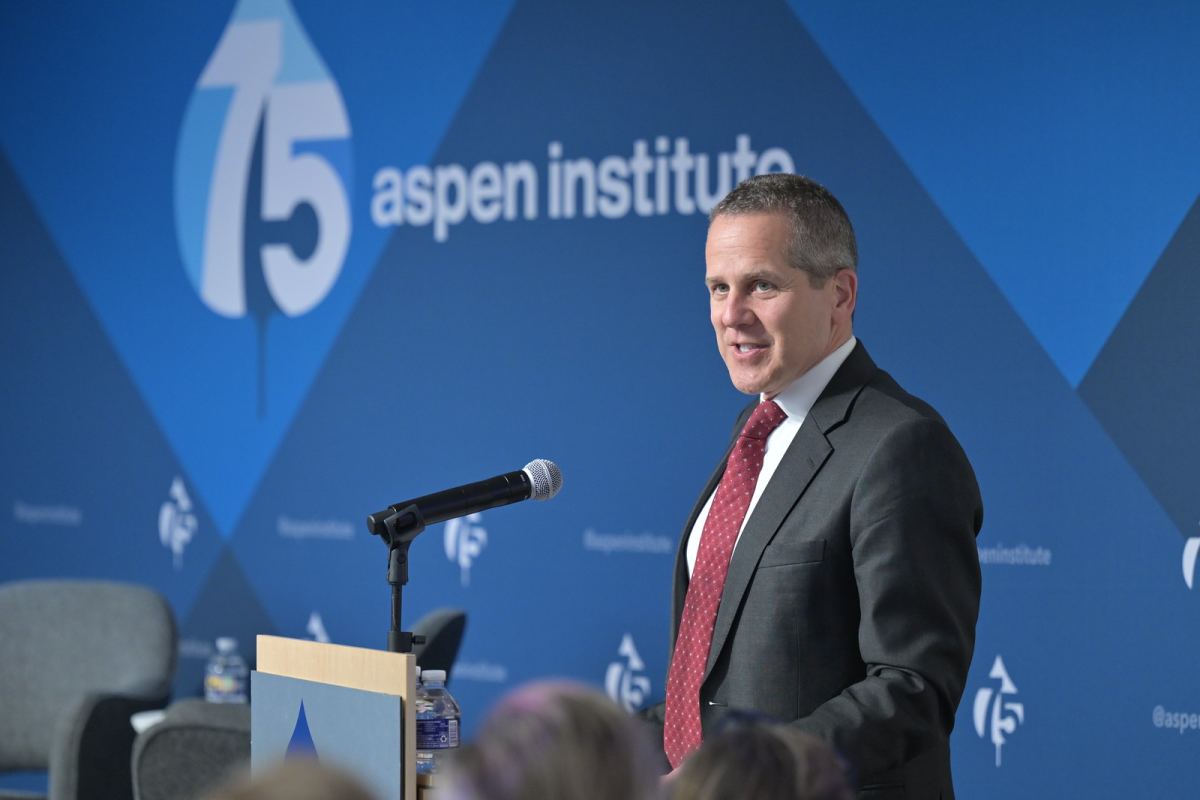
Artificial intelligence could improve financial services, but it may also introduce risks to markets, cybersecurity and consumer protection, US Federal Reserve Governor Michael Barr warned. In remarks delivered Monday in Milan, Barr urged attention both to the financing of AI infrastructure and to how its models are designed and used.
His speech drew on the Federal Reserve's financial stability report published the previous week. That report examines growing investment in data centers and the complexity of some financing arrangements. Barr noted that his views are his own and do not necessarily reflect those of his colleagues at the central bank or on the Federal Open Market Committee.
The governor said he was optimistic about AI's long-term potential to help people and businesses and raise productivity. His concern centers on managing the risks as the technology enters an economy and financial system that already depend on complex relationships among investors, companies and providers.
Financing the AI buildout
Data centers, processors and electricity infrastructure require substantial investment. Barr said a growing share of the buildout is financed with debt, and that a sharp fall in valuations could be amplified by rising borrowing, financial ties among companies and other complex obligations.
According to his remarks, debt recorded on the balance sheets of the seven largest AI firms has grown significantly in 2026 and is expected to exceed $800 billion before the end of the year. That is a projection for those firms, not the debt of the entire industry or an estimate of losses.
The Fed report also estimates that the potential maximum nominal value of certain off-balance-sheet commitments exceeds $3 trillion. These include electricity supply contracts, leases for data centers and computing capacity, and a variety of financing arrangements. The amount represents potential obligations of different kinds; it does not equal money companies have lost or payments that must necessarily be made immediately.
Barr explained that some companies with strong credit ratings indirectly support projects by weaker firms or investments by utilities. Difficulty identifying where risk lies can worsen a sell-off if investor sentiment changes, he said.
When companies invest in one another
Another relationship Barr examined is circular financing. According to the governor, major computing providers and graphics processing unit manufacturers have accumulated more than $100 billion in equity investments in language model laboratories and cloud startups.
Some of the money invested in those smaller firms flows back to the providers when the recipients buy or rent their processors and computing services. Barr said the investments represent a relatively small share of the large firms' balance sheets but are important to the companies receiving them.
For the buildout to be economically viable, he added, those companies will eventually need to replace supplier financing with revenue from paying customers. Barr believes these financial relationships should be examined when assessing the sustainability of growth.
He compared the current investment drive with earlier infrastructure cycles, including railroads, highways and fiber-optic cable. Those investments left useful capacity, although some booms ended with consequences for the financial system. Barr also described another possible scenario: demand for AI services could keep growing and make use of the capacity now being built.
Among the open questions, he cited the useful life of specialized processors and how electrical connections or substations might be used if demand is weaker than expected. In some areas, he said, the extra infrastructure could be useful even outside AI; elsewhere, it might take years to find uses for it.
Algorithms reacting at the same time
AI could also change securities trading. Barr said models can process broader, more complex information than traditional algorithms, make advanced tools more accessible and improve market surveillance. Those capabilities, he said, could help markets function better.
At the same time, he warned that reliance on a small number of similar models trained on similar data could produce synchronized responses to news. If many systems share the same flaw or follow similar strategies, a localized problem could spread more quickly.
Barr said that, to his knowledge, generative AI is not yet used for autonomous trading at large scale. He therefore called for risks to be studied before wider adoption. Model design, training data, testing and the way a system is deployed will influence its effects.
He also cited theoretical research on algorithms that can develop collusive behavior or manipulation strategies without being explicitly programmed to do so. He did not say those studies prove all current trading systems behave that way. He also noted that some markets use machine learning and AI to monitor trades and detect risks.
Cybersecurity and decisions affecting consumers
On digital security, Barr described a contest between attackers and defenders. AI tools can help identify and fix vulnerabilities, but they can also facilitate attacks or produce convincing false content. He stressed the need for businesses and authorities to manage incidents quickly.
For consumers, one concern is the use of automated assistants for financial guidance. Barr observed that some people turn directly to chatbots for investment advice without the same structured protections and oversight that apply when advice comes from a financial institution.
Financial firms also use AI to advise customers. The governor warned that recommendations can contain conflicts of interest if they favor proprietary products, fees or more frequent trading. A system may also rely on incomplete data or produce inaccurate information and recommend investments that do not fit a person's circumstances or tolerance for risk.
In lending, analysis of alternative data could widen access for some households. But Barr said information such as rent payments, utility bills or employment patterns can also act as indirect indicators of protected characteristics. When a model is difficult to explain, it becomes harder to review an adverse decision and check compliance with fair-lending rules.
Barr called on institutions to validate their models, monitor potential biases and provide accessible ways to dispute information or decisions. The discussion combines two goals: making use of technology that can broaden services and reduce costs, while maintaining safeguards when its outputs affect people's money, access to credit and the stability of the financial system.