Alaska Senate race: Justice Department seeks to separate ballots naming a second Sullivan
With Election Day approaching, federal lawyers want ballots ranking a candidate who shares the senator’s surname set aside. Alaska says the request threatens ballot secrecy and cannot establish voter confusion.
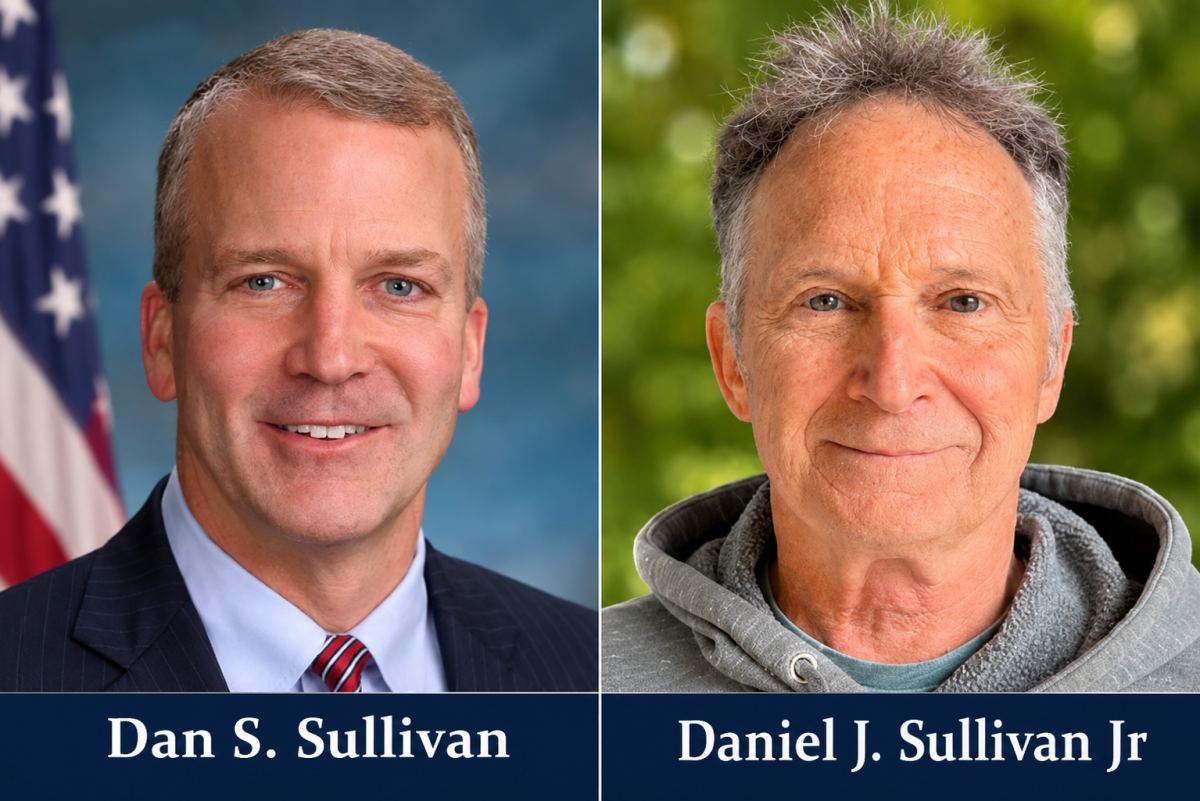
The fight over Alaska’s U.S. Senate election reached a sensitive point on Saturday, October 31. The Justice Department wants ballots listing Daniel J. Sullivan Jr., a candidate whose name resembles that of Republican Sen. Dan S. Sullivan, set aside. Alaska told a federal court that doing so would not reveal whether any voter had made a mistake and, if done while people were voting, could compromise ballot secrecy. A ruling is expected ahead of the November 3 election.
The dispute comes alongside a federal criminal investigation into the second Sullivan’s candidacy. U.S. Attorney for Alaska Michael Heyman confirmed the investigation Friday but did not identify specific offenses or announce charges. Democrat Mary Peltola denied knowing of any plan to put a similarly named candidate in the race. The investigation itself establishes no wrongdoing by her, the candidate or their associates.
Two Sullivans on the ballot
Alaska’s official candidate list identifies the incumbent as Dan S. Sullivan, a Republican. The other candidate appears as Daniel J. Sullivan Jr., with no declared party affiliation. Peltola, a former U.S. representative, is the incumbent’s principal challenger. Their initials, along with the ballot’s party and incumbency labels, distinguish the two men.
The dispute dates to June. Alaska’s Division of Elections initially excluded Daniel J. Sullivan Jr. after complaints about his filing, saying he had sought to run under a name that could be confused with the senator’s. He appealed, and the Alaska Supreme Court ruled that he should appear in the election. His place on the ballot had already been settled when the federal government took its separate case to court in October.
The Justice Department now argues that the similarity could lead some people to vote for the wrong candidate. Its lawsuit seeks to prevent certification of a result that, in its view, might be affected by that confusion. Alaska’s lawyers counter that the federal laws cited by the government do not give Washington the power to change how an election is counted on the basis of that possibility. The underlying legal dispute remains unresolved.
Alaska uses ranked-choice voting, which lets voters rank more than one candidate. If no one wins the required majority in the initial count, the lowest-ranked candidate is eliminated and those ballots move to the next marked choice. A voter could, for example, rank both Sullivans. The system does not rule out a mistaken first choice, but it also means a vote for Daniel J. Sullivan Jr. cannot automatically be treated as a vote lost by the senator.
What the Justice Department wants
In a filing Friday, federal lawyers asked officials to preserve and separate every ballot that ranks Daniel J. Sullivan Jr. They say the step would make it possible to examine later whether his candidacy affected the outcome. They also sought expedited access to information and a preliminary court order. The court had granted none of those requests by the time this report was filed.
Alaska’s response, filed Saturday, distinguishes preserving ballots from sorting them during voting. The state says it already retains federal-election ballots for the required period. If the government merely wants ballots sorted physically after the count, Alaska argues, that would yield no additional evidence about voters’ intentions. If it wants election workers to identify them before they go through voting machines, the state warns, ballot privacy could be put at risk.
At the heart of Alaska’s argument is a simple limit: a ballot shows the choices a person marked, not why they marked them. It does not bear the voter’s name. State officials say no count of preferences can establish whether someone deliberately chose Daniel J. Sullivan Jr. or meant to choose Dan S. Sullivan. Alaska has asked the judge to dismiss the federal suit and let officials count and certify the election under the usual procedures.
A separate criminal inquiry
Heyman said Friday in Anchorage that more law-enforcement resources had been assigned to the case. According to Alaska Public Media, he referred to reporting about contacts between people linked to Peltola’s campaign and others seeking additional candidates for the race. Heyman acknowledged that his office was investigating but said it had not concluded that a crime had occurred.
The Associated Press reported that FBI agents visited a donor to Daniel J. Sullivan Jr. in Petersburg. The donor told the news agency the agents asked about possible irregularities in campaign contributions and that he had not felt misled by the candidacy. His account does not establish the outcome of the broader investigation. Peltola has denied taking part in a plan to confuse voters; Daniel J. Sullivan Jr. has also rejected the suggestion that he ran at Democrats’ request.
The criminal inquiry and the civil suit have different purposes. Investigators must determine whether there is evidence to support charges and against whom. The judge in the civil case must decide whether to intervene in the handling of ballots or the certification of the election. Neither process has produced a conviction or an order to invalidate votes.
Early voting is underway, leaving little time to resolve the dispute before Tuesday. The immediate question is how the court responds to the federal requests and Alaska’s motion to dismiss. Counting will follow; a close race could bring further challenges. For now, there are no general-election totals from which to identify a winner or measure the effect of the second Sullivan’s candidacy.