COP17 opens in Armenia with biodiversity goals progressing too slowly
The first global review of the Kunming-Montreal agreement comes with four years left until 2030. A UN report finds broad participation, but inadequate implementation and gaps in funding and monitoring.
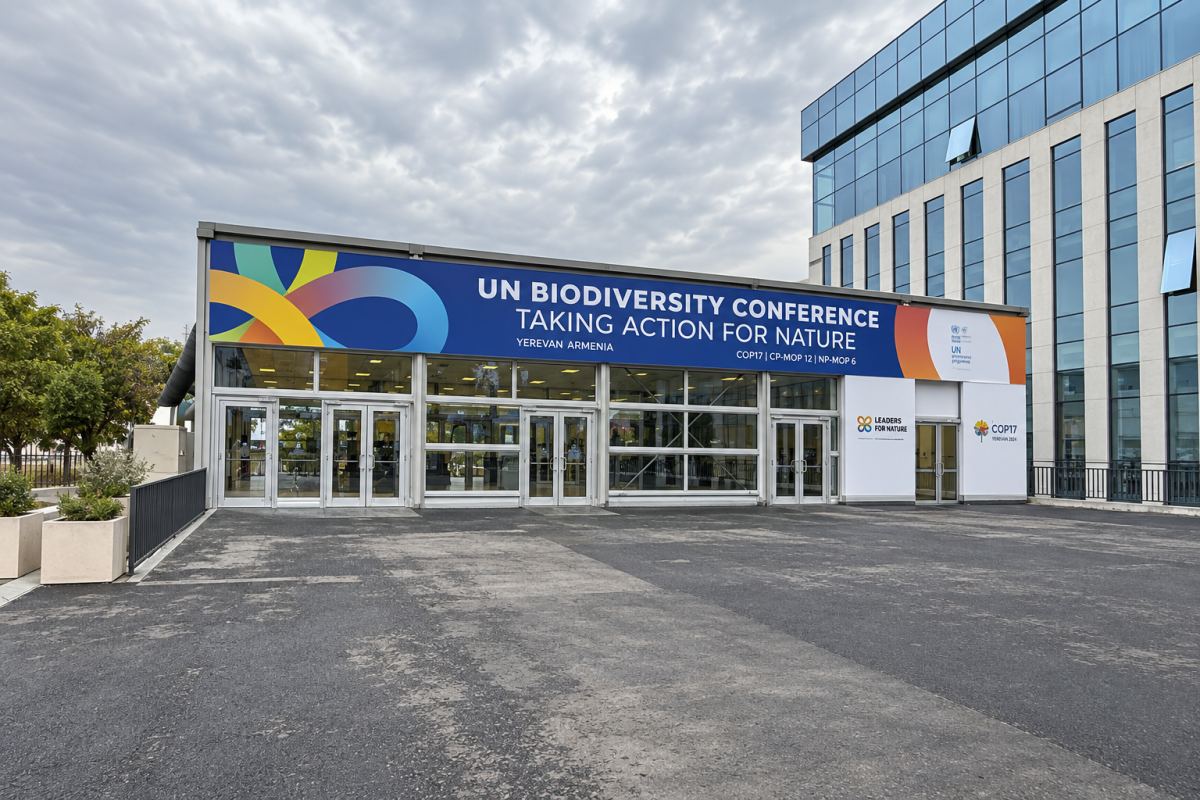
The United Nations biodiversity summit opened on Monday, October 19, in Yerevan, Armenia, with an assessment that distinguishes promises from results: almost 90% of the convention's parties have set national targets, but fewer than half of the targets assessed by countries themselves are considered on track. Four years remain to meet the 2030 goals.
COP17 will conduct the first global review of collective progress under the Kunming-Montreal Global Biodiversity Framework, adopted in 2022. Negotiations will run until October 30, alongside meetings on biosafety and on access to genetic resources and the sharing of benefits arising from them.
Armenian Environment Minister Hambardzum Matevosyan was elected conference president at its opening plenary session, local news agency Armenpress reported. His two-year term begins with a task extending beyond organizing the summit: turning international decisions into verifiable changes on the ground.
Extensive commitments, inadequate implementation
The report guiding the review, State of Biodiversity Action, draws on national reports, updated strategies, scientific assessments and other sources of knowledge. More than 70% of parties submitted reports, according to the opening statement from the Convention on Biological Diversity's secretariat.
The document recognizes action across the framework's 23 targets and extensive mobilization since its adoption. It also identifies two gaps. The first concerns commitments: national targets still do not fully reflect the ambition or all the components of the agreement. The second concerns implementation, where progress remains too slow and uneven.
That distinction helps avoid a misleading reading of the findings. Submitting a plan is not enough to demonstrate that an ecosystem has recovered. Nor does the absence of immediate results mean every action is ineffective: the report itself warns that it is still too early to detect changes in biological outcomes attributable to the process.
The main difficulties include funding, technical capacity, coordination across sectors and insufficient data. The official summary also identifies persistent coverage gaps for marine, coastal and inland-water ecosystems. A global average can conceal significant differences between places and targets.
What the 30% targets mean
One of the best-known commitments is to effectively conserve at least 30% of terrestrial and inland-water areas, and of marine and coastal areas, by 2030. The agreement also requires at least 30% of degraded ecosystem areas to be under effective restoration.
These are related goals, but their baselines differ. Conserving a proportion of territory does not mean restoring that same proportion of the planet's entire surface. In the second case, the commitment concerns degraded areas. Confusing the two percentages can overstate what has been promised or make distinct obligations appear to have been fulfilled.
The quality of the work is part of the agreement. The conservation target calls for well-connected areas that are effectively managed and equitably governed, respecting the rights of Indigenous peoples and local communities. The area designated matters, but it does not replace an assessment of what happens within it.
The framework also includes reducing pollution, tackling invasive species, improving the sustainability of agriculture and fisheries, and halting the extinction of threatened species. Its scope therefore extends beyond creating parks to how goods are produced and consumed, and how economic decisions are made.
Funding and the ability to verify progress
The financial commitment seeks to mobilize at least $200 billion a year from all sources by 2030. Within that effort, international finance for developing countries is to rise to at least $30 billion annually by that date. These are funding targets, rather than money already available simply because the framework was adopted.
The agreement also envisages reducing or reforming incentives harmful to biodiversity, including subsidies. That poses a political challenge: it is not just a matter of securing new resources, but of reviewing economic decisions that may continue to encourage degradation while other programs try to repair it.
In an editorial ahead of the meeting, Nature Reviews Biodiversity warned that monitoring limitations make several targets difficult to assess. Its argument is that funding observation networks and learning from interventions, including unsuccessful ones, are necessary to distinguish administrative effort from ecological recovery.
Nature as part of the economy
For households, the issue extends beyond protecting distant species. Food security, water and health depend on ecosystems continuing to provide services, the convention's executive secretary, Astrid Schomaker, noted in the opening statement. That dependence connects the summit with agriculture, cities and supply chains.
The Yerevan meeting does not begin with a final agreement or a guarantee that every gap will be closed. This first review provides a common basis for discussing where ambition, implementation or resources are lacking. The outcome of the next two weeks will need to be judged by its ability to accelerate concrete action in the time remaining until 2030.