COP17 agrees plan to accelerate nature protection but leaves funding decisions for later
The Yerevan biodiversity summit concluded the world is off track to meet its 2030 targets. Governments agreed on a pathway for action while deferring key decisions on future funding.
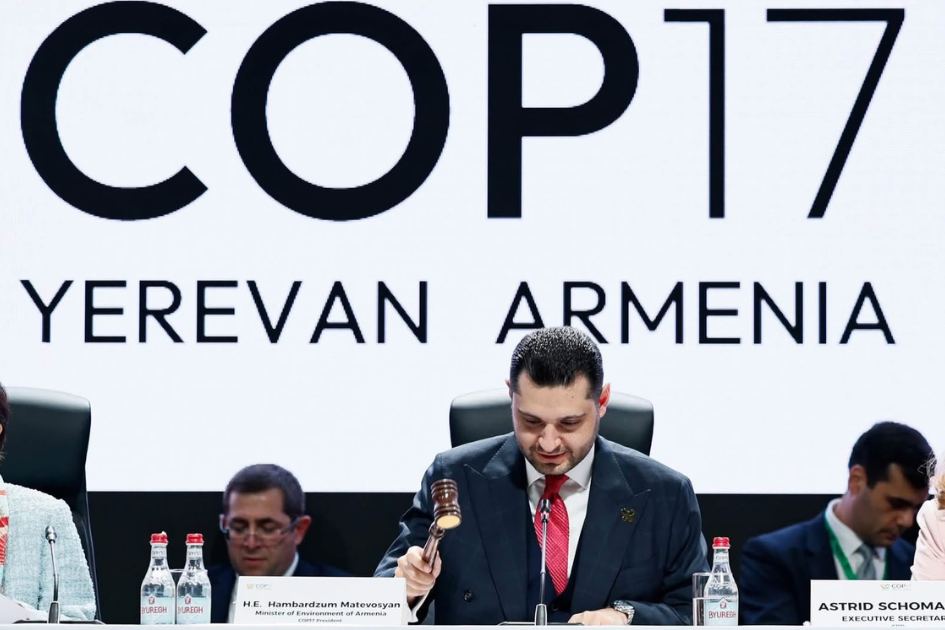
The UN biodiversity summit in Yerevan, Armenia, ended Saturday with a plan to accelerate nature protection by 2030. The agreement, known as the Yerevan Pathway, responds to a troubling finding: the first global review of commitments made four years ago says current action is too slow to meet the 23 agreed targets. Governments adopted decisions on monitoring, scientific cooperation and the participation of Indigenous peoples, but left crucial questions about funding for another round of talks.
COP17 ran into the early hours of October 31. Its outcome does not replace the Kunming-Montreal Global Biodiversity Framework, adopted in 2022; it is intended to speed up implementation with four years left before the deadline. The framework calls for the protection of at least 30% of land and sea, ecosystem restoration and action against the pressures destroying habitats and species. Countries will now be judged by whether those promises translate into budgets, laws and measurable economic decisions.
A review that calls for faster action
The Secretariat of the Convention on Biological Diversity says its collective assessment finds the world off track to meet the 23 targets by 2030. That does not mean every country has made the same amount of progress. It means their combined efforts fall short of the global outcome they promised. The response negotiated in Yerevan calls for stronger national plans, better measurement of results and more financial, technical and scientific support for developing countries.
The challenge extends beyond creating protected areas. It also concerns how governments subsidize activities that damage ecosystems, allocate money to conservation and assess the effects of their policies. That is why the Yerevan Pathway puts reform of incentives harmful to nature and the integration of biodiversity into budget decisions among its priorities. The secretariat said the conference adopted nearly 50 decisions covering subjects from forests and invasive species to marine biodiversity and wildlife management.
Target 18 of the global framework calls for harmful incentives to be reduced by at least $500 billion a year by 2030. Yet the agreement reached at COP17 encourages faster implementation without prescribing specific reforms in sectors such as agriculture, according to the International Institute for Sustainable Development, which followed the negotiations. Acknowledging the problem is easier than changing individual subsidies: removing existing support affects economic interests and requires national decisions that an international agreement cannot make on its own.
Outside the negotiated text, the Armenian presidency promoted voluntary initiatives to encourage incentives that benefit nature. One is a government-led coalition focused on Target 18, co-chaired by Colombia and Finland. It may help countries share practical experience, but joining a voluntary initiative is not the same as a binding, immediate overhaul of every harmful subsidy.
Funding remains the central dispute
Countries again disagreed over who should pay to protect ecosystems, how much they should provide and which institutions should manage the money. Developing countries defended the responsibilities set out in the convention and called for predictable resources. Several developed economies sought to broaden the pool of potential contributors. The final agreement sets criteria for a future financial mechanism but postpones a decision on its institutional structure after 2030 until COP18. Governments will also continue examining existing funding tools and obstacles to accessing them.
The Kunming-Montreal framework seeks to mobilize at least $200 billion a year from all sources for biodiversity by 2030. Announcing new initiatives at a summit is different from reaching that annual total. The convention secretariat counted announcements of nearly $2 billion in biodiversity funding at COP17, including $560 million associated with replenishment of the Global Environment Facility and its Global Biodiversity Framework Fund. It also cited initiatives to help species recover and draw in private investment. Those announcements cover different kinds of commitments; the combined figure does not show that the money has all been disbursed or that the funding gap has closed.
That distinction will become clearer as countries report what they have actually done. An announced fund may take time to reach a community, and its effect depends on how the money is allocated and what measurable results follow. Protecting forests, coasts and species takes sustained work, while the 2026 review makes clear how little time remains before 2030.
Indigenous participation and the next summit
Another COP17 decision sets operating rules for a permanent body devoted to Article 8(j) of the convention, which concerns the knowledge and participation of Indigenous peoples and local communities. The rules, called the Sevan Guidelines, are intended to strengthen their role in international biodiversity policy. Their practical impact will depend on whether communities have a meaningful part in decisions and receive support for the territories they steward.
Delegates also failed to settle every connection between biodiversity policy and other environmental agreements. A decision on certain forms of cooperation with the climate and desertification conventions was deferred, according to the International Institute for Sustainable Development. COP18 will be held in Quito, Ecuador, in 2028. By then, only two years will remain to determine whether the Yerevan Pathway has changed a course that currently leaves the world short of its nature goals.