Federal judge dismisses lawsuit seeking to block certification of Alaska Senate election
The Justice Department appealed the ruling in a dispute over two candidates named Sullivan. The judge found the requested inquiry could compromise ballot secrecy.
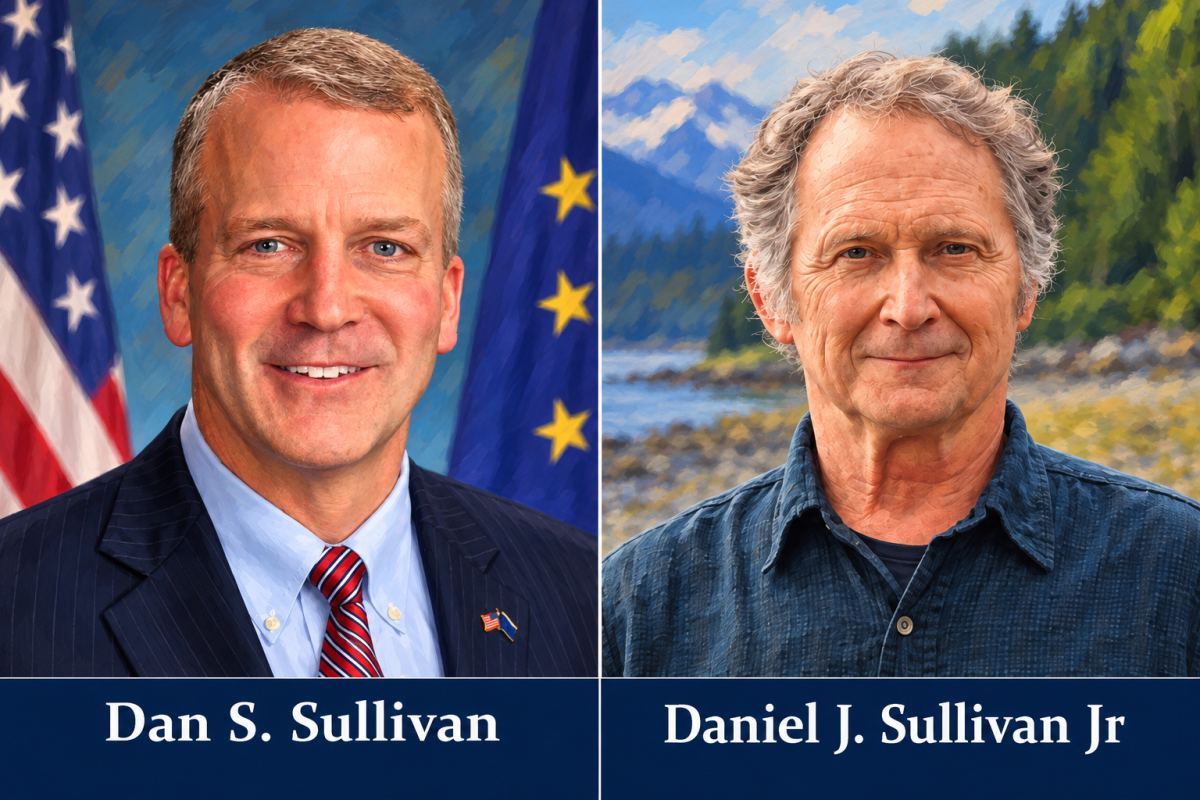
A federal judge on Sunday dismissed a Justice Department lawsuit seeking to block certification of Alaska’s US Senate election under certain circumstances. The dispute centers on two candidates named Sullivan who appear on the ballot. The federal government filed a notice of appeal shortly after the ruling.
Judge Sharon Gleason found that the department had not shown a court could grant the remedy it sought without compromising the secrecy of the ballot. Her decision came two days before the November 3 midterm elections and after early voting had begun.
Republican incumbent Sen. Dan S. Sullivan is seeking reelection against Democrat Mary Peltola, a former US representative. Also in the race are Daniel J. Sullivan Jr., a retired teacher with no party affiliation, and Republican Gerald Heikes. All four advanced from the August primary.
The lawsuit and the secret ballot
The Justice Department argued that Daniel J. Sullivan’s presence could confuse people intending to vote for the senator. It asked the court to prevent certification if the incumbent lost and if votes cast for the other Sullivan, had they been assigned to the senator, could have changed the outcome. In that event, it sought an inquiry into voters’ intentions.
The request did not apply automatically to every outcome, nor did it mean confusion had already been proven. It was made before the general-election result was known. President Trump has said he directed the department to bring the lawsuit.
In her 20-page ruling, Gleason explained that many ballots already cast had been mixed together in a way that prevented them from being linked to particular voters. She also said the federal government had offered no workable plan to separate Daniel J. Sullivan’s votes and investigate voters’ intentions without compromising ballot secrecy.
She therefore concluded that the lawsuit failed to meet a requirement for legal standing: showing that the requested remedy could address the alleged harm. The ruling dismissed the case without resolving every allegation about how Daniel J. Sullivan entered the race. The notice of appeal opens the way for review by a higher court; it does not itself reverse Gleason’s decision.
Two names and earlier rulings
The dispute began before the general election. In June, Alaska’s elections director attempted to exclude Daniel J. Sullivan from the primary, finding that his candidacy could mislead voters. The retired teacher challenged that decision and prevailed in state court. The Alaska Supreme Court later affirmed the ruling and directed the division to determine how his name should appear on the ballot under state law.
The federal ruling says ballots identify the senator as Dan S. Sullivan, a Republican and the incumbent, while the other candidate appears as Daniel J. Sullivan Jr., with no party affiliation. State election officials defended those distinctions and opposed the federal request, arguing that the proposed inquiry would endanger ballot secrecy.
In the August primary, Peltola received 49.54% of the vote, the senator 41.40%, Daniel J. Sullivan 2.47% and Heikes 1.05%, according to the figures cited by the judge. Those results determined who advanced to the general election; they do not determine the November 3 outcome.
How Alaska counts votes
Alaska uses ranked-choice voting. Voters can rank candidates, and a candidate wins if they receive more than half of active ballots in the first count. If no one reaches that threshold, the candidate with the fewest votes is eliminated and their ballots transfer to the next available choice, until a winner is determined under state rules.
That means first-choice votes alone are not enough to decide the race if no candidate passes the halfway mark. The federal lawsuit asked the court to examine a hypothetical scenario in which votes for the second Sullivan had gone to the senator and to recalculate the race on that basis.
Alaska argued that marks on a ballot cannot establish why a person chose a particular candidate. In its court response, the state also warned that delaying certification only if a particular candidate lost would interfere with election administration.
Separate investigation and appeal
The dispute took on another dimension after The New York Times reported efforts linked to Peltola’s campaign circle to find candidates who might draw support away from the senator. The Democratic campaign denied recruiting candidates for the race. Those allegations are separate from the procedural issue decided Sunday.
There is also a separate criminal investigation, according to federal officials cited by US news outlets. CBS and Alaska News reported that no charges had been announced in connection with it. An investigation is not the same as a formal charge or a conviction.
The Justice Department defended its lawsuit and announced it would appeal. Alaska must continue administering the vote and subsequent count under its rules as the case proceeds. Tuesday’s election will decide one of the seats that could influence control of the Senate during the second half of Trump’s term.