EU sets out enlargement roadmaps as Montenegro could finish accession talks this year
The European Commission has proposed indicative timelines for Montenegro, Albania, Moldova and Ukraine. Membership will depend on reforms and approval by EU member states.
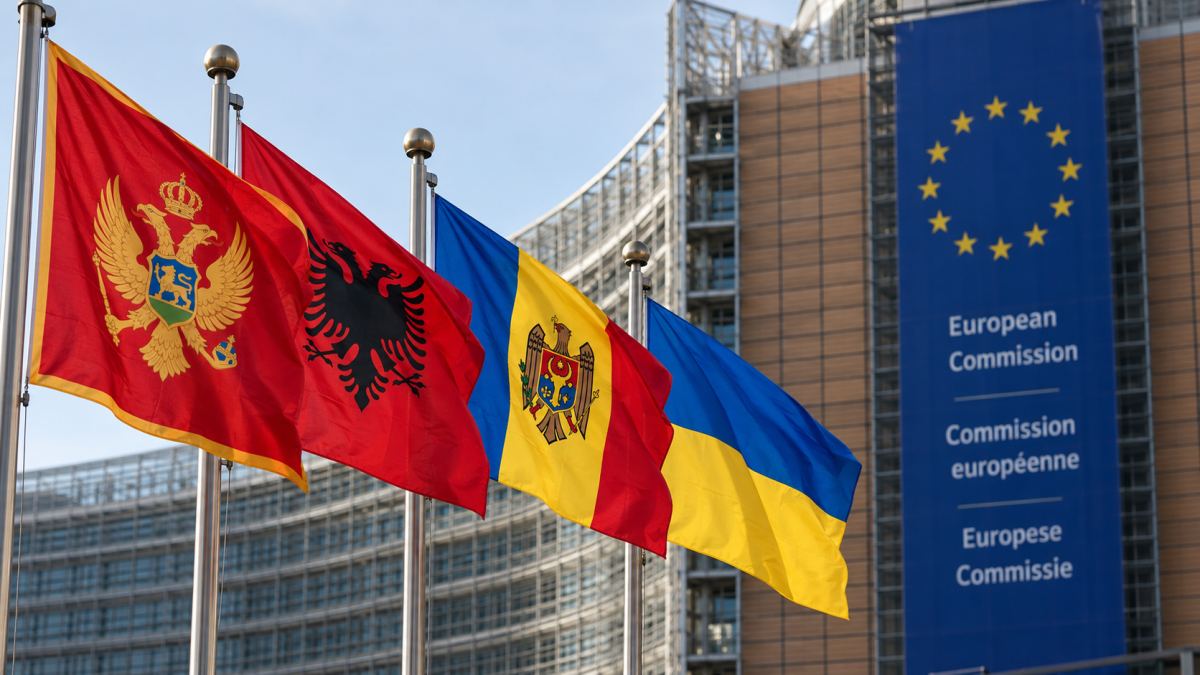
The European Commission on Wednesday presented new roadmaps for accession negotiations with Montenegro, Albania, Moldova and Ukraine, with Montenegro leading a process that could pave the way for the European Union's first enlargement since Croatia joined in 2013.
Brussels believes Montenegro could conclude negotiations by the end of 2026 and sign an accession treaty in June 2027. The Montenegrin government aims to join in 2028. These are targets subject to conditions and decisions by member states, rather than dates guaranteeing automatic entry.
The proposals form part of the Commission's annual enlargement report, adopted on November 4. For the first time, the EU executive has accompanied its assessment of the most advanced candidates with indicative timelines to guide the next stages of their negotiations.
Commission President Ursula von der Leyen said progress by some applicants made it possible to move forward with enlargement. The assessment also stresses that the pace of each country's candidacy will depend on its reforms and decisions by EU governments.
Montenegro moves closer to concluding negotiations
The Balkan country began accession talks in 2012. Since then, it has had to bring its laws and institutions into line with EU standards in areas ranging from justice and competition to food safety and the environment.
Concluding negotiations means agreeing on the terms of entry in these policy areas, known as chapters. A chapter is closed provisionally until the entire process is completed. The subsequent treaty will need the necessary approvals in Montenegro and the current member states before accession can take effect.
The Commission said it was already working on the financial aspects of Montenegro's prospective membership and on the corresponding treaty. Montenegrin newspaper Vijesti reported that financial issues, institutional arrangements and safeguards still needed to be agreed before negotiations could end, along with the closure of outstanding chapters.
Signing the treaty would therefore be an important milestone, but a period of ratification and monitoring would still lie ahead. According to the document examined by Vijesti, Montenegro is expected to participate as an active observer in numerous working groups between signing the treaty and joining the bloc.
Reforms and corruption: the work still to be done
The favorable outlook does not remove concerns over the functioning of institutions. Vijesti, which examined the Commission's report on Montenegro, said Brussels acknowledged progress in the justice system but called for further efforts to strengthen its independence and the fight against corruption and organized crime.
The newspaper noted that the Commission still considered the number of final convictions for high-level corruption to be low. It also reported concerns over external influence on the media and discrimination against vulnerable groups. Lengthy proceedings and adjournments remain problems in organized crime cases.
These observations show that passing legislation is only part of the EU's assessment: implementation and institutions' ability to enforce the rules are also examined. Domestic political support for integration will be another factor in sustaining reforms.
Albania, Moldova and Ukraine progress at different speeds
The Commission included Albania, Moldova and Ukraine among countries that have advanced in their negotiations, although their circumstances differ. For Albania, it considers the goal of concluding talks by the end of 2027 ambitious but achievable if reforms and political dialogue are maintained.
Moldova and Ukraine have pursued their candidacies amid strong external pressure and, in Ukraine's case, war following Russia's invasion. The Commission proposes roadmaps for both countries; these set out indicative targets rather than predetermine the outcome of negotiations.
According to The Associated Press, Brussels believes Moldova could finish its talks in early 2028, while urging Ukraine to accelerate reforms to meet its goal of concluding them by the end of that year. Each prospective accession will require further decisions by member states.
Other applicants in the Western Balkans face obstacles of their own. The EU assessment identifies problems with democracy, justice and the rule of law in various countries. Negotiations do not move forward at a uniform pace, and the new timelines for the most advanced candidates do not replace the requirements each country must meet.
What enlargement means for the EU
Adding a member brings another country into the common market and institutions, but also requires agreement on how policies will apply and how responsibilities and resources will be shared. Enlargement therefore involves both reforms by candidates and preparations within the EU itself.
Brussels presents enlargement as an investment in European security, stability and competitiveness. For applicants, the prospect of membership offers a political and economic horizon; for current members, it poses decisions requiring consensus and ratification.
Montenegro's next test will come at negotiating meetings scheduled before the end of the year. If conditions are met and the parties agree, the treaty could move toward the planned signing date. Until then, Montenegro remains a candidate, and the Commission's timelines are a guide contingent on actual progress.