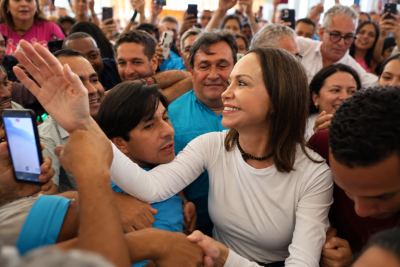
Serbia’s Student List leads official partial count as Vučić concedes defeat
Official partial results from 8,135 of 8,392 polling stations put the Student List at 52.65%. Vučić has conceded; the final seat count is pending.
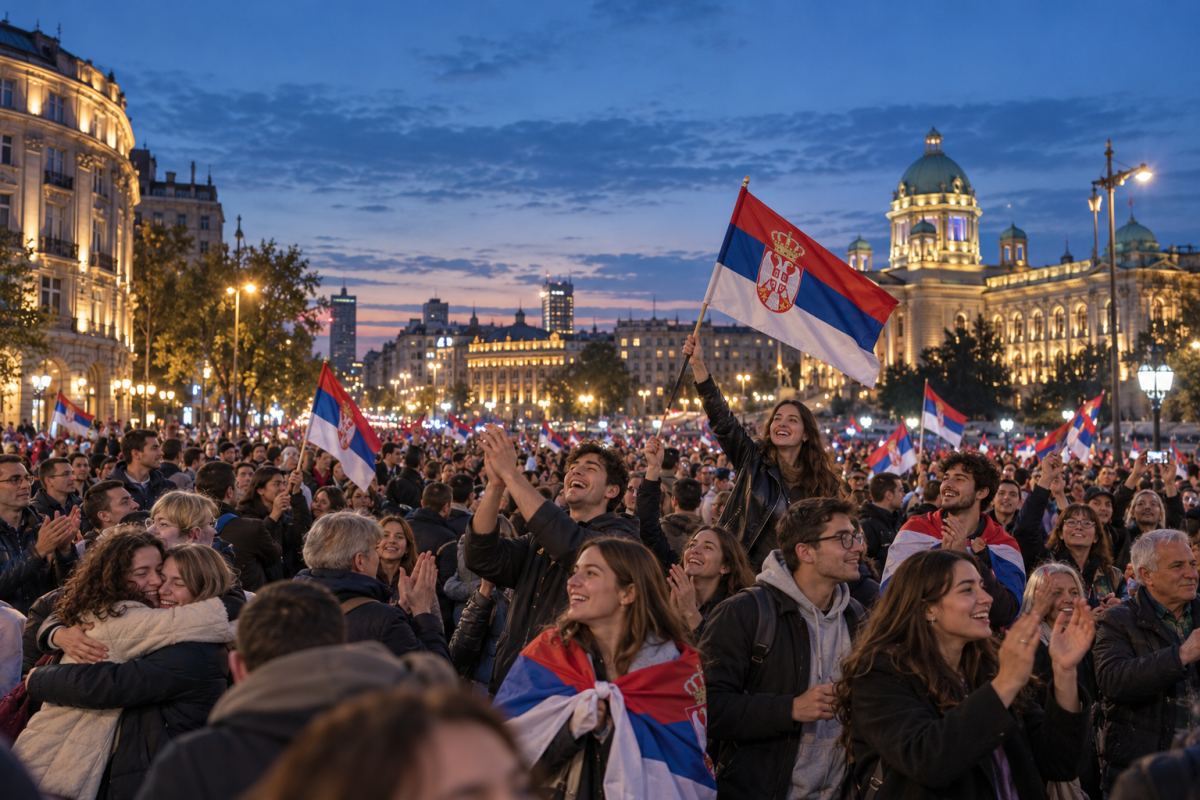
Serbia’s student-led list emerged ahead in Sunday’s snap parliamentary election, and Aleksandar Vučić acknowledged that his political bloc had lost. Supporters celebrated in Belgrade and other cities overnight. The next step belongs to the electoral authorities: turning projections into an official seat count before the winners can form a government.
On Monday morning, Serbia’s Republic Electoral Commission released partial results from 8,135 of 8,392 polling stations. The Student List had 2,246,423 votes, or 52.65%, while United Serbia had 1,673,241, or 39.22%. These are official but preliminary figures: 257 polling stations remained to be processed, and the final seat allocation was still pending.
Separately, a projection from election monitors CeSID and Ipsos, reported by Serbian media after 96% of their sample had been processed, put the Student List on 52.9% of the vote and 140 of the National Assembly’s 250 seats. It put Vučić’s United Serbia list on 38.8% and 103 seats. Those figures come from an independent projection, not a final declaration by Serbia’s Republic Electoral Commission. The commission continued to release polling-station records as they arrived and were processed. The official distribution of seats will be set when the count is complete, despite Vučić’s concession.
Vučić spoke after the polls closed and acknowledged that his list had been defeated. He had left the presidency in September to lead his bloc’s campaign and seek the prime minister’s office. His concession is politically significant, but it does not certify every ballot or resolve any challenges to the count. Nor does it establish how the incoming majority will choose ministers and organize the work of government.
From street protests to the ballot box
The movement’s origins lie in a disaster that predated the campaign. The collapse of a railway-station canopy in Novi Sad in November 2024 killed 16 people and prompted protests demanding accountability and transparency. Students who initially organized demonstrations went on to assemble a national electoral list. A demand for answers about a public construction project grew into a broader challenge over corruption, institutions and the exercise of political power.
Serbia voted on October 25 in an early election. The electoral commission had formally approved the Student List’s participation weeks earlier. According to Serbian broadcaster N1, 8,392 polling stations were prepared for an electorate of more than 6.45 million. Polls closed at 8 p.m., with exceptions where voting had been interrupted for a prolonged period or people were already waiting in line. The collection and review of polling-station records then began.
That process does not end when a politician concedes before the cameras. The commission receives each polling station’s record, digitizes it and publishes progressive results. Only after the process is complete can it fix the official allocation of the Assembly’s 250 seats. Lists representing national minorities also contested the election. Their results may affect the chamber’s final composition, even though the student-led bloc has been projected to win a comfortable majority.
The challenge of governing
The size of the projected lead suggests that the Student List could form a government without relying on the bloc that has dominated Serbian politics. But the campaign brought together people whose common starting point was protest. They now face decisions about priorities, appointments and a program that can turn demands for accountability into budgetary, judicial and administrative action. Candidate Ilija Srdanović described the next stage as building a state governed by the rule of law, according to Radio Free Europe/Radio Liberty.
The response of the outgoing political camp will also matter. Vučić accepted that his bloc had lost, while attributing the outcome to foreign interference. He did not present evidence establishing the interference he alleged.
European leaders are watching closely. European Council President António Costa congratulated the Student List and offered support for reforms involving the rule of law, press freedom, anti-corruption measures and democratic institutions. His response signals a political opening, but Serbia has not joined the European Union, and the issues delaying its accession remain unresolved. Belgrade has long pursued EU membership while maintaining close ties with Russia and China. The policies of a future government, rather than its identity alone, will show whether that balance changes.
International observation is still under way. The Organization for Security and Co-operation in Europe’s election-monitoring office deployed a mission for the vote and has yet to complete its assessment. That review is separate from both CeSID’s projection and the commission’s official count. In an election shaped by protests over public trust, access to polling-station records, the handling of complaints and a complete publication of results will carry particular weight.
Serbia therefore faces the prospect of a far-reaching change in government, with several formal steps still ahead. The Student List leads the available projections clearly, and Vučić has conceded defeat. The commission will determine the final votes and seats. After that, the decisive test for the winners will be whether a movement built in the streets can govern and remain accountable to Parliament and the public.