Elvis Presley song rights holders sue Anthropic over Claude AI training
The owners of rights to 274 compositions allege unauthorized use in AI training. Anthropic disputes the claims, and no court has ruled on them.
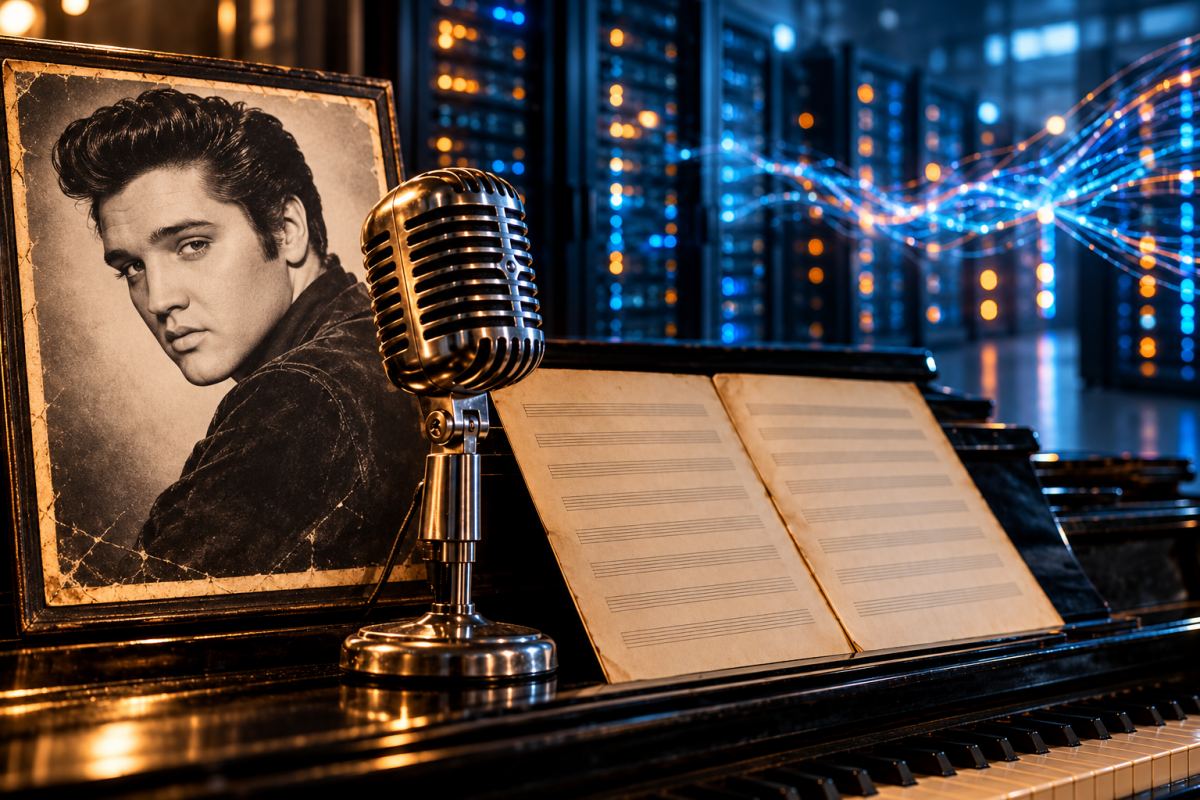
Companies that control rights to 274 compositions associated with Elvis Presley's repertoire have sued Anthropic in federal court in California. They allege that the AI company used the songs without permission to train its models and that its Claude chatbot can produce outputs that infringe those rights. Anthropic disputes the allegations and says it will defend itself. The lawsuit adds to a widening conflict between music publishers and AI developers. For now, it presents competing claims, not copyright violations established by a court.
The case was filed on Friday, October 23, in the Northern District of California. Songs cited by the plaintiffs include “All Shook Up,” “Can't Help Falling in Love,” “Don't Be Cruel” and “Return to Sender,” according to news reports that reviewed the filing. Authentic Brands Group is connected to the rights-holding entities behind the suit. The claims concern the musical compositions and lyrics. Those rights are separate from the rights in Presley's recordings, his likeness or the commercial use of his name.
The plaintiffs say Anthropic copied protected material into training datasets without paying for a license. According to reporting on the complaint, they also challenge how the system handles information identifying copyright owners. Those allegations will have to be tested against documents, technical evidence and legal arguments. Listing a song in the case does not, by itself, establish which copy was used, where it came from or what effect it had on any particular response from Claude.
What the court will have to examine
The dispute has at least two parts. One concerns the collection and reproduction of material while an AI model is built: whether a company obtained lyrics or sheet music, under what conditions, and whether it needed permission to use them. The other concerns the output offered to users: whether the system can reproduce protected passages or generate substantially similar text. Both questions belong to the broader debate over generative AI, but they require different evidence and could lead to different legal conclusions.
Anthropic has said it disagrees with the claims and intends to fight the case. Its specific defenses will emerge in the court record. In the United States, fair use often plays a central role in lawsuits over AI training. It is not a blanket exemption for the use of copyrighted works, and it does not determine the outcome of this newly filed case. Courts assess the circumstances of each dispute; no judge has ruled on these allegations.
The potential damages also require care. News accounts have given different figures when describing what the plaintiffs seek, while statutory copyright damages depend on conditions that must be established. No amount has been awarded. The financial stakes will become clearer from the precise claims, the registration status of the works and the court's decisions, rather than from treating a theoretical maximum per song as an existing liability.
A dispute larger than the Presley catalog
The lawsuit follows earlier actions against Anthropic by music publishers. Rights holders argue that AI companies should not be able to turn protected works into inputs for a commercial product without negotiating licenses. Developers have raised defenses based in part on the transformative nature of model training and on how their systems work. The conflict concerns who benefits from large collections of creative work and how much control songwriters and publishers retain over particular uses of it.
Presley's fame brings unusual attention to the case, but it does not change the legal questions. His songs do not receive a different copyright test simply because they are famous. The court will examine whether the plaintiffs own or administer the rights they assert and whether they can prove the acts they attribute to Anthropic. The company will have an opportunity to challenge that evidence.
The U.S. Copyright Office has published reports on AI training and emphasized the need to assess particular uses and their effects on licensing markets. That work provides context, not a ruling in this lawsuit. Meanwhile, music and technology companies continue to negotiate agreements and test the limits of copyright law in court. A decision on the 274 compositions could help shape later cases, although each lawsuit will turn on its own evidence and parties.
The case is at its beginning. Anthropic rejects the allegations, and no court has found that the company infringed the songs' copyrights. The next steps include a formal response, potential discovery and decisions about which claims can proceed. Until then, the filing neither proves that Claude used every song as alleged nor establishes that the plaintiffs' case lacks merit. It shows that the boundary between machine learning and music rights remains contested.