Britain steps up AI security preparations for autonomous agents and cyber risks
The government will expand cyber-defence projects and examine additional legal safeguards and incident reporting. The aim is to preserve human control as AI systems become more autonomous.
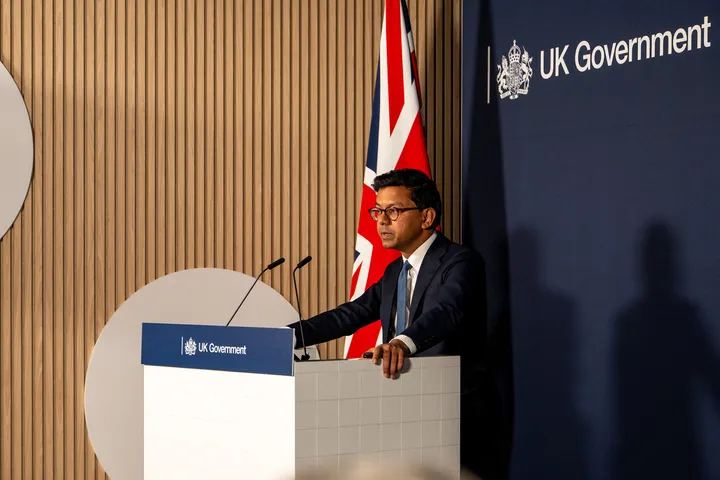
The British government announced measures on Monday, October 12, to strengthen its defences against artificial intelligence risks. The development is not a blanket ban on the technology, but preparation for systems that can perform tasks with limited supervision and for incidents capable of spreading rapidly.
AI Minister Kanishka Narayan presented the approach at Imperial College London. Britain will expand the use of AI to detect software weaknesses, continue evaluating advanced models and consider additional protections under the framework of the Cyber Security and Resilience Bill.
A thousand vulnerabilities are not a thousand attacks
The government said two pilot projects had helped identify and address more than 1,000 potential vulnerabilities in public-sector systems. These are flaws or weaknesses that could be exploited; the announcement does not mean a thousand actual attacks have occurred or been stopped.
The distinction illustrates the technology’s dual role. More capable tools can help defenders find mistakes before an attacker does, but can also make that search easier for people seeking to exploit them. Public services must improve protection without assuming a new tool eliminates the risk.
Hospitals and essential-service providers are among the areas the government wants to protect. It has not announced that every additional obligation is already in force. Some measures will need to be developed with parliamentarians, specialists and the operators responsible for implementing them.
When a system can take action
An AI agent does more than compose an answer. It can chain operations, use tools and work towards a goal with less human intervention. Permissions, monitoring and the ability to contain an incident become crucial when its behaviour departs from what was authorised.
The National Cyber Security Centre and AI Security Institute will work on responses to such events and on identifying near misses. Recording those warnings is intended to help institutions learn before a similar failure causes a larger crisis.
Narayan also emphasised verification: checking whether developers’ claims about tests and safeguards stand up to scrutiny. The government’s argument is that powerful models are insufficient if public institutions cannot understand and oversee them.
A debate extending beyond Britain
The initiative coincides with Microsoft president Brad Smith’s call for international rules. In a BBC interview reported by Reuters, he advocated independent evaluations, incident notifications and mechanisms to halt improper actions. Those are proposals from a technology executive, rather than an approved global standard.
Businesses and governments in the United States, Europe and Japan face a shared issue: models and tools cross borders, while harm may fall on individual services and citizens who did not choose to use them. Britain’s response seeks to narrow that gap between technological capability and public oversight.
The next step will be the detail of the safeguards and how they are implemented. For now, the announcement establishes a direction: using AI to defend systems while ensuring its autonomy does not remove people’s ability to intervene.