McPherson beats Georgia at the buzzer to reward Auburn's resilience
The Tigers defeated the AP poll's No. 1 team 27–24. Brown powered their comeback, and a fumble recovery in the final minute opened the way for the decisive field goal.
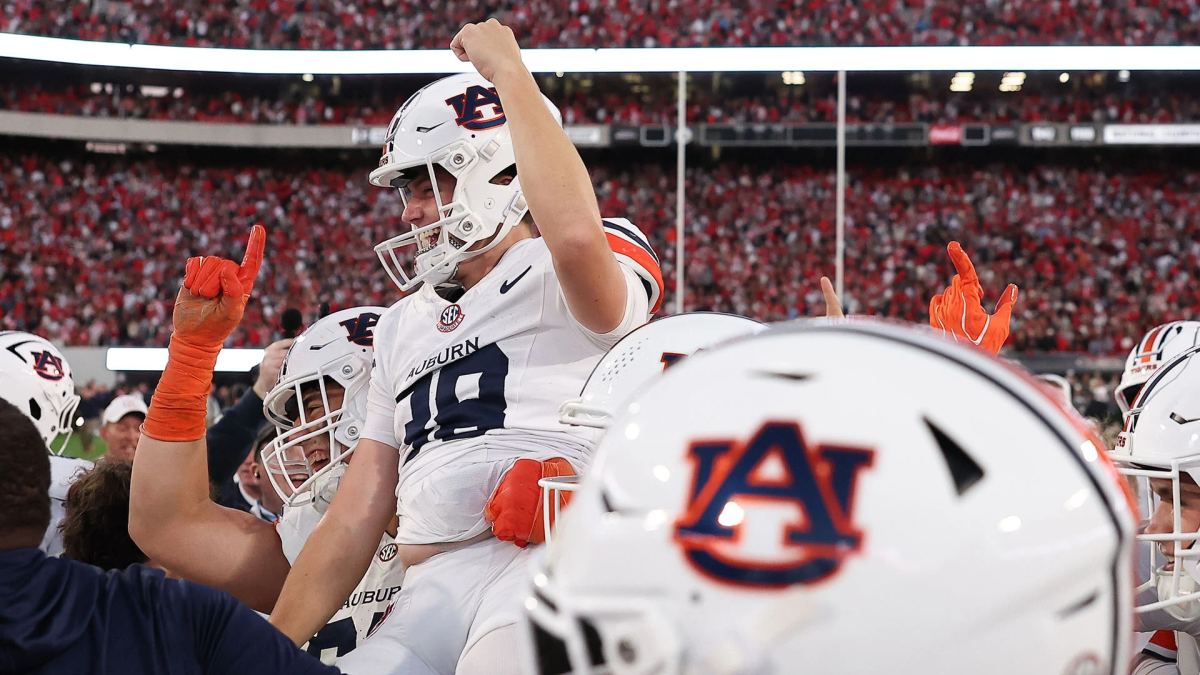
Auburn defeated Georgia 27–24 in Athens on Saturday, October 17, with Alex McPherson's 34-yard field goal as time expired. The Tigers had overturned a 14–0 deficit, then watched their own ten-point advantage disappear before finding one last opportunity through a Gunner Stockton fumble. Sylvester Smith-Reed recovered it with 58 seconds remaining. Auburn turned that unexpected possession into five plays and 40 yards, enough for its kicker to settle the game without overtime.
The result toppled the team that had arrived ranked No. 1 in the Associated Press poll, rather than a College Football Playoff ranking. Georgia finished at 6–1 overall and 4–1 in the Southeastern Conference; Auburn improved to 4–2 and 2–2. The final margin was small, but the game passed through several distinct phases: the Bulldogs' dominant opening, the visitors' 24 unanswered points and the home side's return to level terms before the turnover that determined the final possession.
Two touchdowns did not bring control
Georgia opened with a five-play, 75-yard drive that Dwight Phillips Jr. finished with a fifteen-yard touchdown run. There were 12:03 left in the first quarter. Ryan Puglisi took part in that possession and completed all three of his passes in the game for 55 yards. Those gains formed part of the Bulldogs' total of 327 passing yards; they were not all Stockton's. The home offense began by finding answers and soon put another one on the scoreboard.
On its next drive, Georgia covered 89 yards in seven plays. Stockton connected with Lawson Luckie for a 24-yard touchdown with 6:49 remaining in the quarter. Peyton Woodring's two extra points made it 14–0, a substantial advantage with Auburn still scoreless. But the game had yet to reveal the Tigers' response, particularly the one they could produce through Byrum Brown's running.
The first reply took a different route. Christian Neptune threw a 24-yard touchdown pass to Keshaun Singleton with 3:07 left in the first quarter. Brown did not complete that throw: the official record credits the pass to receiver Neptune. The play allowed Auburn to finish a nine-play, 75-yard drive. After two Georgia scores, the visitors had found a way into the opposing end zone.
Brown supplied the touchdown pass that tied the game. In the second quarter, he found Chas Nimrod from nine yards out to finish an eleven-play, 64-yard possession. It became 14–14 with 6:32 left before halftime. McPherson added a 49-yard field goal before the break, putting Auburn ahead 17–14. The turnaround had been built through three scoring possessions while allowing no further Georgia score after its second touchdown.
Brown turns the comeback into a ten-point lead
Halftime did not interrupt the visitors' progress. Auburn opened the second half by moving 76 yards in nine plays. Brown finished the drive with a five-yard touchdown run with 11:28 remaining in the third quarter. The extra point made it 24–14. The Tigers had scored 24 consecutive points since falling behind 14–0, a sequence that required Georgia to rebuild its route to victory completely.
Brown finished with 115 rushing yards on 26 carries, in addition to 150 through the air. Jeremiah Cobb added 61 on the ground. Their contributions helped Auburn finish with 192 rushing yards to Georgia's 113. That comparison captures an important part of the visitors' performance: the quarterback was more than the distributor. He also shouldered a substantial share of the running and contributed a touchdown both passing and rushing.
Georgia gained more total yards, 440 to 366, but also turned the ball over three times: two interceptions and the final fumble. Auburn lost no possessions through an interception or a fumble recovered by the opposition. Moving farther did not guarantee that the Bulldogs would have the decisive opportunity. The turnovers limited the value of some of their gains and ultimately changed which side could attempt the last field goal.
Georgia draws level and loses its last opportunity
Woodring brought the hosts closer with a 42-yard field goal with 14:15 remaining. The drive had covered 49 yards in fourteen plays and consumed seven minutes, two seconds. At 24–17, Georgia was again within a touchdown and extra point. Later, Stockton led a possession covering even more ground: 94 yards from his own six-yard line, ending with a four-yard touchdown pass to London Humphreys.
The touchdown came with 2:58 left. Woodring converted and the game was tied at twenty-four. Auburn had to punt on its next possession, giving the Bulldogs the ball back with 1:12 to play. They no longer needed to erase a ten-point deficit: a drive that gave their kicker a chance to win would suffice. But the possession ended before they could achieve that objective.
Stockton lost the ball on a run, and Smith-Reed secured it for Auburn at its own 44-yard line. The official record credits Cody Sigler with forcing the fumble. With 58 seconds available, Cobb opened the final drive with a twelve-yard run. Brown then added five more. The visitors advanced far enough to leave the outcome to McPherson, who converted from 34 yards as the clock ran out.
The Associated Press highlighted Brown's importance to Auburn's running game, an assessment supported by his 115 yards and share of the carries. The victory, though, also required a defensive recovery at the most delicate moment and the kicker's execution. Georgia had come back from ten down; Auburn found a way to answer after losing that lead. The final possession turned its resilience into a three-point victory.