UK pledges £17 million to repair Chernobyl's war-damaged protective structure
The contribution supports work to restore containment and ventilation around the destroyed reactor. Engineering studies and the repairs still ahead point to a recovery taking several years.
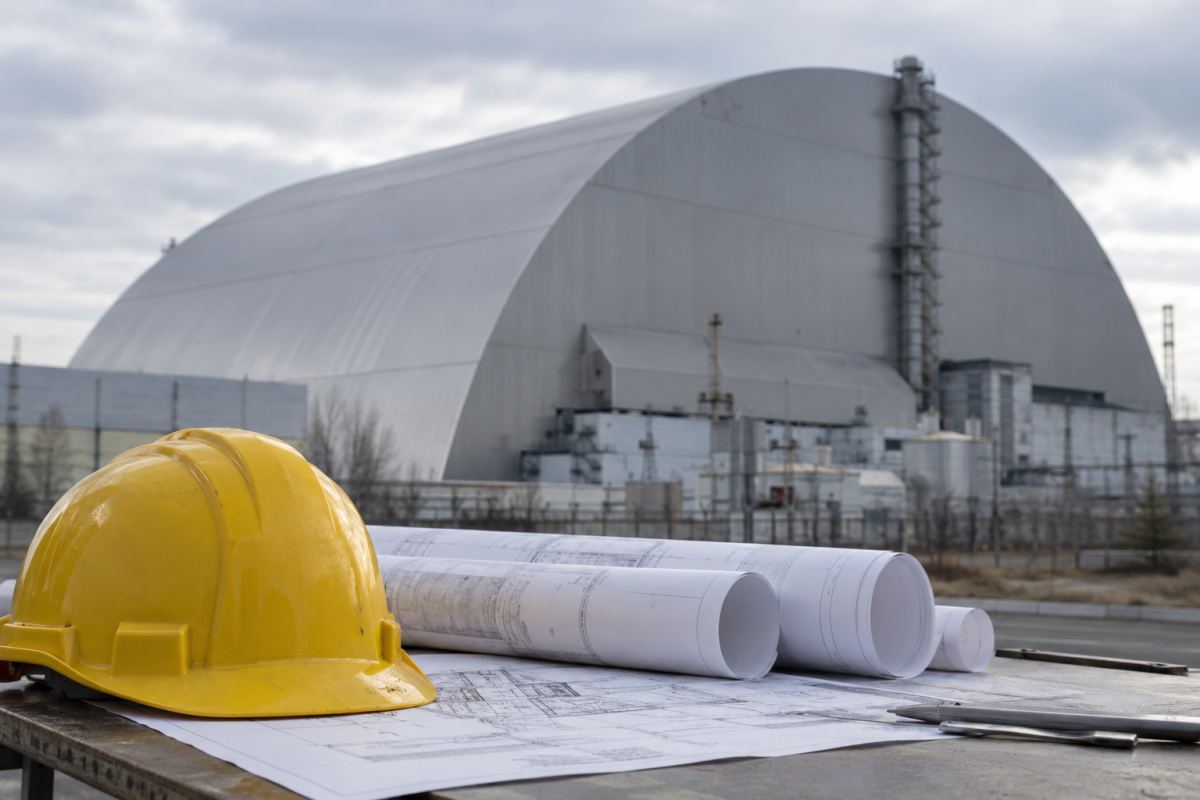
The United Kingdom announced a £17 million contribution Thursday to repair the structure protecting the remains of Chernobyl's reactor four. The funding will support the restoration of containment and ventilation functions damaged in a Russian drone attack in February 2025, as part of an international program coordinated by the European Bank for Reconstruction and Development.
The contribution addresses a consequence of the war that will require work for years. The enclosure needs its safety functions restored, while corrosion must be prevented from undermining its service life. The funding announcement does not mean repairs are complete: studies, design and procurement are part of a process that still has to be carried out.
What Chernobyl's enormous arch protects
The New Safe Confinement, known as the NSC, covers the reactor destroyed in the 1986 accident and the emergency shelter built after the disaster. Its purpose is to contain hazardous materials and allow the safe dismantling of that original shelter, which is also deteriorating over time.
The European Court of Auditors notes that the new structure was completed in 2019 as part of the Shelter Implementation Plan. The plan's full program, including stabilization of the old shelter and related work, cost about €2.2 billion. That figure covers the broader program, not just the arch itself.
Its role explains why Chernobyl still needs funding four decades after the accident. Work at the site includes decommissioning, waste management and handling spent fuel. Taking a facility out of electricity production does not end the obligation to secure the materials left behind.
Damage to safety functions requires repair
The February 14, 2025 attack damaged the confinement's outer structure and started a fire. The EBRD warned that the damage affected two central functions: containing radiological hazards and enabling long-term dismantling. Among the remaining concerns is the possibility that corrosion could reduce the safety of the steel structure.
The severity needs to be described precisely. In a report dated April 14, 2026, the Ukrainian operator recalled that an International Atomic Energy Agency assessment in November 2025 had confirmed the loss of certain design functions. That assessment also found that the load-bearing structures and monitoring systems remained intact and that no radiological release had occurred.
The document distinguishes damage to a safety barrier from a radiological release, which the assessment did not find. That distinction does not diminish the need for repairs. Restoring the intended functions is meant to prevent deterioration that could increase risks over time.
Britain's contribution meets part of a larger need
The £17 million joins a program involving Ukraine, G7 donors and the EBRD. The British government said its support would help restore containment and ventilation and protect the structure's intended service life. Ukrainian outlet LB.ua also reported the announcement and the participation of the country's energy authorities.
The work required is much larger than that individual contribution. Preliminary assessments cited by the EBRD put the possible repair cost at at least €500 million. That is an estimate that depends on the development of technical solutions. It is also separate from the €30 million that donors had endorsed for engineering and preparatory work.
Those amounts represent different commitments and needs. A national contribution, a preparatory budget and an estimate of the final cost cannot simply be added together without knowing which work each covers. Technical documentation and subsequent donor decisions will need to clarify how the full restoration is funded.
An engineering contract is already in place
On September 17, Chernobyl's operator reported signing a contract with Novarka 2 to begin engineering work. The signing took place the previous day in Vienna during the IAEA's General Conference. The assignment includes gathering technical information, carrying out inspections and developing initial restoration concepts.
The EBRD-backed program is intended to move from that assessment to engineering solutions, a repair strategy and documents for future procurement. Where justified, it also provides for preparing purchases of components with long lead times. That sequence is designed to reduce redesigns and premature construction commitments.
The operator's stated goal is to restore the confinement's full functionality by 2030. It is an implementation target, dependent on funding, approved solutions and working conditions. Temporary stabilization measures continue while the restoration program is developed.
The European Commission had already highlighted difficulties in responding to the fire in April, including work at height and exposure conditions on the roof. Repairing the enclosure requires specific safety procedures and coordination with Ukraine's nuclear regulator.
The aid announced Thursday adds funding to that effort. Its effectiveness will ultimately be measured by the verified restoration of the confinement's functions. Until then, protecting a structure built to reduce the risks left by 1986 remains a present-day responsibility.