James Talarico's Texas Senate bid: who he is and what it would take to beat Ken Paxton
The Democrat is running on faith, public education and affordability. Recent polls show a competitive race, but winning Texas requires turning attention into a statewide voting coalition.
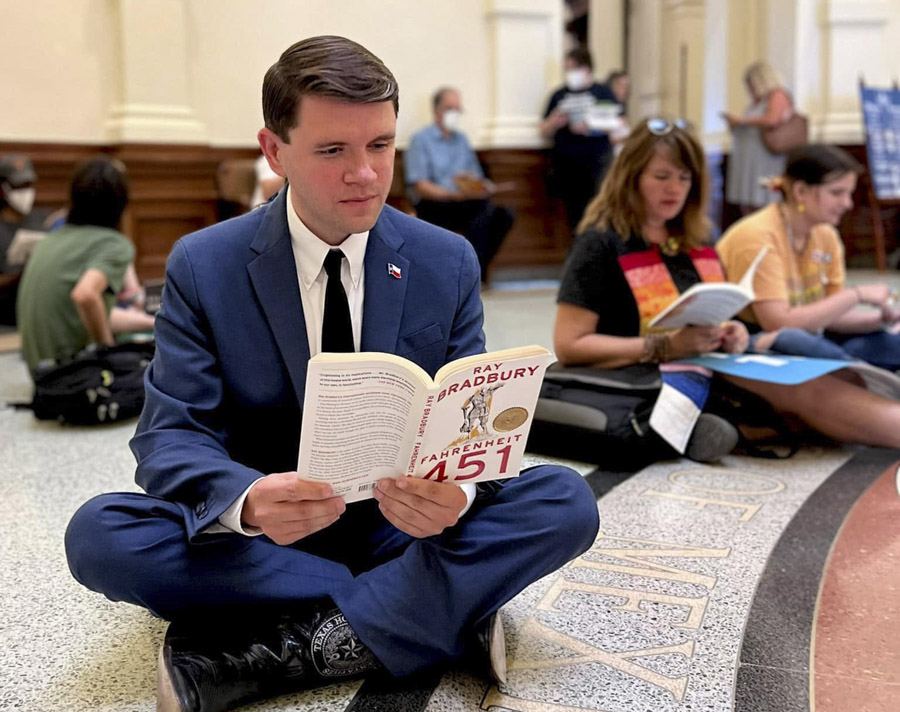
James Talarico is trying to change the terms of a familiar Texas argument. The former teacher and state legislator does not concede that Republicans alone can speak for faith, family or freedom. A Presbyterian seminarian, he places those ideas alongside a progressive economic agenda in his campaign for the U.S. Senate. Republican nominee Ken Paxton offers a different frame: the election is a fight to preserve conservative Texas.
Their November 3 contest is therefore about more than whether voters like a new Democratic messenger. It tests whether concerns about schools, medical bills and household finances can overcome party loyalty in a Republican state. Recent polling gives Talarico a credible opening. It does not establish that he has assembled the electorate needed to win.
From teaching to the Texas Legislature
Born in Round Rock, Talarico was first elected to the Texas House in 2018. He studied at the University of Texas at Austin and Harvard and taught middle school in San Antonio. Education is consequently central to his political identity rather than an issue added for a federal campaign.
His campaign describes the difficulties his students faced as a reason he entered politics. He now champions public schools, opposes private-school voucher subsidies and advocates expanded prekindergarten. His Senate platform also calls for strengthening teacher training and supporting reading and mathematics. That combination could appeal to conservative parents who value their local public schools, although agreement on a school issue does not necessarily produce a Democratic vote.
Talarico, who has type 1 diabetes, also helped advance insulin cost-sharing limits. Texas legislation capped covered patients' out-of-pocket costs at $25 per prescription for a 30-day supply of formulary insulin under plans subject to the law. It did not make all insulin cost $25 for every Texan. Understanding the coverage limits matters when evaluating a concrete legislative achievement.
A progressive platform with a different political vocabulary
Affordability is a major campaign theme. Talarico proposes a $15 federal minimum wage, expanded family tax credits and higher taxes on large corporations and wealthy Americans. His housing proposals combine increasing supply with action against corporate practices he argues inflate rents. The substance is economically progressive even when the intended audience includes voters who do not identify with the left.
That agenda faces two tests. Workers must believe it would improve their finances; voters concerned about investment and employment must be persuaded that the taxes and regulations would not undermine those goals. Campaign priorities are a direction, not enacted legislation or demonstrated economic outcomes. Their effects would depend on design, congressional agreement and implementation. A senator can introduce and negotiate legislation, but cannot deliver a platform alone.
On immigration, Talarico supports border security alongside legal immigration channels and legalization pathways for specified undocumented groups. He proposes prioritizing the removal of criminals and traffickers, modernizing ports of entry and strengthening the asylum system. The approach distinguishes border enforcement from indiscriminate removal, while exposing him to Republican attacks about whether Democratic policies would keep the country secure.
Faith creates another point of contrast. Talarico rejects Christian nationalism and defends church-state separation. He also supports federal legislation restoring abortion-rights protections. His Christianity should not be mistaken for social conservatism. It is part of his argument that progressive positions can have a moral foundation recognizable to religious voters.
Paxton's campaign portrays Talarico as radical and presents the race as a defense of conservative Texas. That is campaign framing rather than a neutral description. It asks Republicans with reservations about an individual candidate to focus on the party and the consequences of losing the seat. Talarico needs the reverse: enough voters willing to assess his candidacy before rejecting his Democratic label.
What the Texas Senate polls show
Siena's October 3 release reported Talarico at 51% and Paxton at 45%. The Democrat's advantage has varied across surveys, however.
Marist found 50% for Talarico and 44% for Paxton in September 17–20 interviews with 1,139 registered voters, reporting a margin of error of ±4.4 percentage points. Emerson's September 12–14 survey of 1,000 likely voters found 47% and 46%, respectively, with a credibility interval of ±3 points.
Registered voters and likely voters are different populations. Field dates, interview methods and weighting decisions also differ. Together, these results support describing the election as competitive. They do not turn a six-point lead into a precise win probability, nor establish that the same gap will survive until Election Day.
Candidate appeal also needs to be separated from broader partisan preferences. The University of Texas/Texas Politics Project's August survey had Talarico ahead of Paxton, 42% to 39%, while its generic congressional ballot favored Republicans, 48% to 44%. In that poll, a competitive Democratic Senate candidate did not mean Texas voters preferred Democrats across the board.
The coalition he needs
First, Talarico needs Democrats to remain with him and vote. A campaign reaching toward independents cannot take its usual supporters for granted. If a conciliatory tone is interpreted as distance from their concerns, an effort to add voters can lose others.
Second, he needs to expand beyond that base. His arguments about wages, schools and prescription costs must be credible to independents and Republicans willing to split their tickets. Religious language may open a conversation, but it does not erase disagreements about abortion, immigration or taxes. The challenge is to convert familiarity into political trust rather than simply media attention.
Third, he needs to reduce losses in places he cannot win. A statewide race is decided by votes, not the number of counties carrying a party's color on a map. Improving a losing margin can contribute as much as increasing a winning one. Urban population growth, likewise, is not an automatic Democratic victory: eligibility, registration and participation determine its electoral effect.
Paxton's task is to preserve a Republican majority against a Democrat showing appeal beyond his party. Polarization could help him if the contest becomes a referendum on the national Democratic agenda. It could hurt if enough Texans separate their Senate choice from their other Republican preferences. Neither outcome is fixed before the campaign ends.
Why Texas matters to Washington
A Democratic victory in Texas would not by itself hand the party Senate control; that depends on the complete election map. It would change an important part of Washington's balance and challenge assumptions about which statewide races Democrats can contest successfully.
The immediate test is participation. Texas's registration deadline is October 5. In-person early voting runs October 19–30, and Election Day is November 3, according to the secretary of state's office. For Texans who intend to vote, checking registration is more consequential right now than arguing about a forecast.
Talarico has moved the debate beyond whether a Democrat can attract attention in Texas. The question is whether he can assemble enough votes. Polls show an opening; Paxton retains the appeal of the state's Republican identity. The result will depend on how many voters cross that partisan boundary—and how many actually cast a ballot.