Asian Cup rescheduling reshapes the calendar: new dates and what they mean for teams
The AFC has moved the Saudi Arabia tournament to December 23, 2027–January 21, 2028. The postponement requires national teams to reorganize preparations and players’ schedules.
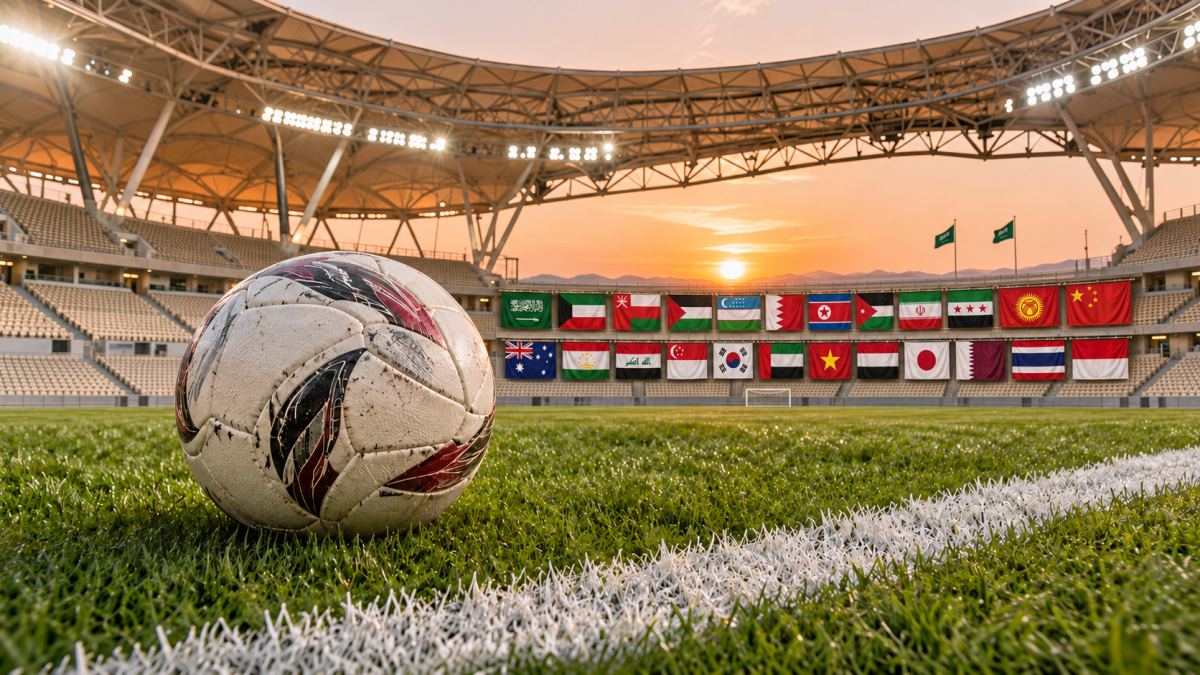
The men’s Asian Cup that Saudi Arabia was due to host in early 2027 now has a different time frame: December 23, 2027, to January 21, 2028. The Asian Football Confederation announced the rescheduling because of logistical difficulties and travel disruption arising from regional developments. The change affects a 24-team tournament and alters preparations planned for the coming months.
The competition was originally scheduled for January 7–February 5, 2027. In announcing the postponement, the AFC said the new dates would be submitted to FIFA for approval. Football Australia communicated the same proposed period on November 3, specifying that it was subject to that approval.
Saudi Arabia remains the host, and the tournament retains its Saudi Arabia 2027 designation. The announced decision postpones the competition to a period spanning December and January; it does not cancel the edition.
A change affecting the entire preparation cycle
National teams had arranged training camps and friendlies with a tournament early in 2027 in mind. Moving it back almost a year requires them to reconsider how they schedule warm-up matches, assess players and organize their coaching work.
Australia provides a concrete example. In September, its federation announced November friendlies against Qatar and Jordan as part of the final preparations for the January tournament. After the postponement, those matches remained important, but the context in which they were being played changed.
Football Australia’s executive director of football, Heather Garriock, explained that the start of qualifying for the 2030 World Cup, scheduled for September 2027, would now come before the Asian Cup. The team will have to adjust its preparations to that order of competitions.
Coach Tony Popovic also stressed the value of making the most of the limited opportunities to bring the squad together. In announcing his November squad, he said the team needed to keep developing for both World Cup qualifying and the continental championship in the second half of 2027.
Security is already changing friendly fixtures
Venue changes during this international window show that regional difficulties have consequences beyond the postponed tournament. Australia and Jordan agreed to move their November 17 friendly from Amman to Doha, where the Australian squad was already based.
Football Australia announced the agreement on November 13 following discussions with the Jordan Football Association. It allowed the match to go ahead while avoiding an additional journey. The Australian federation said the safety of players and staff had been a priority in the talks.
A change to a friendly does not necessarily entail a change to the Asian Cup. Nevertheless, the need to coordinate federations, authorities and travel illustrates the operational demands of bringing national teams from across a continent together for several weeks.
The AFC cited exceptional circumstances, logistical complexities and travel disruption as the reasons for postponement. It also said it would work with the local organizing committee, participating federations, commercial partners and broadcasters to limit the effects of the change.
Twenty-four teams and a familiar format
The competition regulations provide for six groups of four teams. Each side plays the other three teams in its group once. The top two from every group, along with the four best third-placed teams, advance to the round of 16.
The tournament then proceeds through a knockout stage consisting of the round of 16, quarterfinals, semifinals and final. The edition comprises 51 matches. Every team starts with three group games, and the format allows some third-placed sides to remain in contention.
The draw placed Australia with Singapore, Iraq and Tajikistan in Group D. Group F contains Japan, Qatar, Thailand and Indonesia. That group brings together Japan, the tournament’s most successful nation, and Qatar, winner of the previous two editions.
With the new dates still some distance away, performances in November cannot settle tournament squad selection. Coaches will have more time to assess players, but will also need to monitor their playing time, physical condition and development at club level.
Qatar will defend a title won in 2024
The previous edition was called Qatar 2023, although it took place from January 12 to February 10, 2024. Qatar defeated Jordan 3–1 in the final to win its second consecutive championship.
That precedent helps explain why the year identifying an edition does not always match all its playing dates. Saudi Arabia 2027 remains the name of the next Asian Cup even though the proposed final falls in January 2028.
Japan heads into the next championship with four titles. Its pairing with Qatar adds sporting interest to a group stage that will also depend on how Thailand and Indonesia develop. The draw determines the opponents; each team’s form will depend on the work done over the intervening months.
What supporters should check
Changing the overall tournament period does not automatically move every match from the old schedule to an equivalent new date. Supporters making travel plans need the updated fixture list and the terms applying to tickets, flights and accommodation.
Kickoff times and stadium allocations published for January and February 2027 belonged to the previous schedule. The AFC will communicate rescheduling details through its official channels. Whether a booking can be changed or refunded depends on the provider and the terms of the purchase.
For national teams, the immediate priority is to use the available international windows while adapting the route to the tournament. For supporters, the central reference is the newly announced period, December 23, 2027–January 21, 2028, alongside the approval process identified by the organizers.