Five people assessed after turbulence on JetBlue flight to Fort Lauderdale
Flight 1717 from Ponce landed safely on Tuesday. Emergency responders evaluated passengers and crew; all five people who reported injuries or required assessment declined transportation to a hospital.
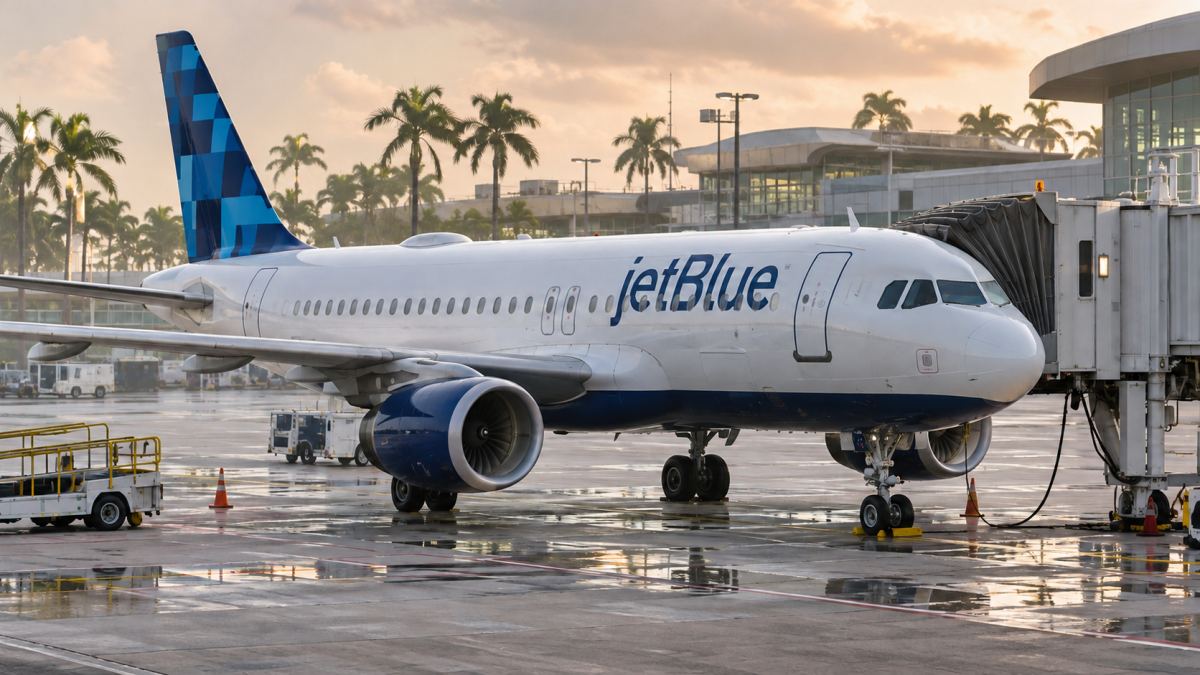
Five people reported injuries or required medical evaluation after a JetBlue flight from Ponce, Puerto Rico, encountered turbulence before reaching Fort Lauderdale-Hollywood International Airport in Florida on the morning of November 17. The aircraft landed safely, with emergency responders waiting at Terminal 3.
Broward Sheriff Fire Rescue told CNN it received reports of injuries shortly before 6:30 a.m. local time. Flight 1717 landed at approximately 6:58 a.m. All five people identified during the response declined transportation to local hospitals.
JetBlue confirmed to CNN that the aircraft encountered turbulence and that medical personnel evaluated passengers and crew members. Fire rescue officials said there were no reports of structural damage to the aircraft. WSVN published CNN’s report, while Local 10 also covered the emergency response.
Medical teams waiting at the terminal
The response was organized before the aircraft reached the gate. According to fire rescue officials, the initial alert allowed crews to prepare to assess those reporting injuries when the flight arrived. After landing, the aircraft continued to Terminal 3.
The figure of five includes people who reported injuries and those who required evaluation. The statement did not give a breakdown of passengers and crew, or describe the type or severity of the injuries. Declining hospital transportation does not, by itself, establish a medical diagnosis.
Initial reports described the event as severe turbulence. In its response to CNN, JetBlue confirmed turbulence without publicly identifying its meteorological cause in that statement. The available information also does not specify the altitude or exact location along the route where it occurred.
The flight departed from Ponce and was bound for Fort Lauderdale. It reached its destination, and the medical assessments took place after landing. No technical finding explaining why this particular flight encountered the air movement involved has been announced.
How injuries can occur without aircraft damage
Turbulence is irregular air movement that can occur unexpectedly. The Federal Aviation Administration explains that it can be associated with jet streams, weather fronts, thunderstorms, pressure differences or airflow around mountains. It can also happen when the sky appears clear.
People and objects inside the cabin can move abruptly when the aircraft’s motion changes. For someone without a fastened seat belt, a sudden movement can cause a fall or impact. Cabin safety therefore requires specific precautions even when there is no report of structural damage to the aircraft itself.
A National Transportation Safety Board study published in 2021 examined turbulence-related accidents in U.S. airline operations governed by Part 121 regulations between 2009 and 2018. Those events accounted for more than a third of the accidents in the category studied. Most involved one or more serious injuries without damage to the aircraft.
The finding concerns recorded accidents within a particular regulatory category, rather than a third of all flights. It illustrates why an event can have consequences for people on board even when the aircraft is not damaged.
Flight attendants’ exposure
In the same study, flight attendants accounted for 97 of the 123 people seriously injured, or 78.9%. The other 26 were passengers. The report examined work activities, cabin location and seat belt use to understand how injuries happened.
Cabin work involves moving around in ways passengers do not for much of a flight. The NTSB recommended improving turbulence information and reducing situations that leave crew members exposed. It also concluded that wearing a seat belt reduces the risk of serious injury.
Those findings provide aviation safety context, but do not describe what happened to each person on Flight 1717. Reports about the Fort Lauderdale incident do not detail what the affected people were doing or whether their seat belts were fastened at the time.
The most immediate protection for passengers
The FAA recommends keeping a seat belt fastened whenever seated, even when the seat belt sign is off. It also advises passengers to follow instructions from pilots and flight attendants, pay attention to the safety briefing and comply with carry-on baggage restrictions.
The agency’s guidance for airlines emphasizes reminding passengers that turbulence can happen unexpectedly. After landing, it recommends warning people to take care when opening overhead bins because their contents may have shifted during the flight.
For children under two, the FAA says the safest place is an approved child safety seat or restraint device. Protecting young children requires an appropriate restraint system as well as following the crew’s instructions.
Prevention also relies on information shared among pilots, air traffic controllers and dispatchers. The FAA promotes reports of conditions encountered in flight and forecasting tools that help crews avoid turbulence. Such resources support operational decisions, while remaining secured in a seat continues to matter when sudden movement occurs.
In Fort Lauderdale, officials’ reported total remains five people who reported injuries or needed evaluation. All five declined the hospital transportation offered by emergency responders. JetBlue confirmed that passengers and crew were assessed after the aircraft completed its journey from Puerto Rico.