King Charles III puts slavery debate on Commonwealth summit agenda, makes no reparations pledge
The king acknowledged historical suffering in the Bahamas, while Caribbean groups called for a formal apology and concrete action before the meeting in Antigua and Barbuda.
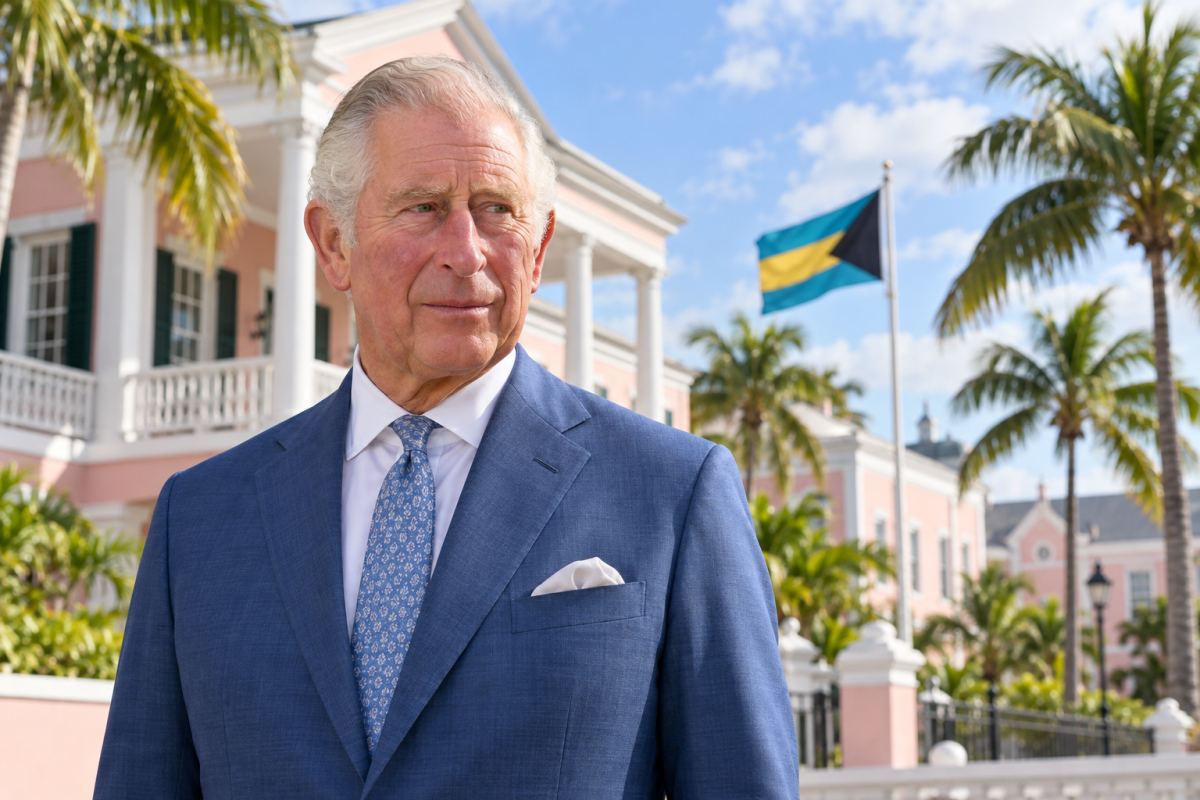
King Charles III’s first day in the Bahamas brought a demand into focus that the formal programme could not set aside: an apology for slavery and a substantive discussion of reparations. Speaking in Nassau, the king acknowledged the suffering associated with slavery and said its legacy would be discussed at the forthcoming Commonwealth meeting. He did not make a formal apology or promise a payment. Bahamian and wider Caribbean groups seeking reparations argue that acknowledging the past without agreeing on action leaves the central part of their demand unanswered.
The visit began on Tuesday, 27 October, ahead of the Commonwealth Heads of Government Meeting that Antigua and Barbuda will host from 1 to 4 November. Charles is due to visit Guyana first. The gathering brings together 56 countries with different histories and constitutional relationships, many of them former parts of the British Empire. Its official agenda includes climate, trade, investment and development. But the transatlantic slave trade and its enduring effects have become a test of what the organisation can do with a shared history its members do not interpret in the same way.
What the king said in Nassau — and what he did not
Charles addressed young people in Nassau and, according to reports by the Associated Press and Reuters, acknowledged the suffering caused by slavery. He also accepted that the issue would be part of the summit’s discussions. Buckingham Palace had described the tour as an opportunity to listen to communities, learn about environmental initiatives and reflect on colonial history. The royal programme includes events in the Bahamas, Guyana, and Antigua and Barbuda before the visit ends on 4 November.
For groups demanding reparations, words of recognition have a clear limit. The Bahamas National Reparations Committee has called for a formal apology and measures addressing lasting historical harm. It questioned whether the visit would become little more than an institutional celebration. There were also calls in the country to allow peaceful demonstrations during the royal stay, after police outlined security arrangements along the route. Bahamian newspaper The Tribune reported that a Rastafarian group intended to deliver a petition to the king.
Local opinion is not uniform, either about the visit or about retaining the monarchy. The Bahamas is an independent Commonwealth country, but Charles III remains its head of state. Some people see the visit as a chance to draw attention to national needs, including protection for the islands against climate change. Others see the monarch’s presence as a reminder of a constitutional relationship they regard as incompatible with full historical redress. Those positions coexist; they cannot be reduced to a single welcome or protest.
From a national demand to a regional agenda
The call for reparations extends beyond the Bahamas. The Caribbean Community, CARICOM, has pursued a regional reparatory-justice agenda for years. In a July 2026 communiqué, its heads of government agreed to give the issue greater prominence at the meeting in Antigua and Barbuda and to continue working with the African Union. The regional debate encompasses apologies, historical recognition, education and development measures. A demand for reparations does not necessarily imply one fixed sum or an agreed payment mechanism.
In Antigua and Barbuda, the local reparations support commission has asked the king to use his influence as head of the Commonwealth to encourage substantive dialogue. A letter sent to his private secretary before the tour called for the forthcoming meeting to move beyond recognition towards decisions. The host country therefore approaches the summit with an agenda of its own, even as the Commonwealth Secretariat officially frames the gathering around faster partnerships and investment for shared prosperity.
The Commonwealth includes countries in Africa, Asia, the Caribbean, the Americas, Europe and the Pacific. Its symbolic head does not direct member governments and cannot impose an agreement on reparations. Decisions at the summit belong to political leaders and require negotiation. Charles can help open the conversation or give it visibility, but an apology on behalf of the British state and any financial decision also lie with the UK government. Blurring the roles of the Crown, the government in London and the Commonwealth makes it harder to see who would have to answer each request.
History and the pressures of the present
The tour has brought another part of that relationship into view. In the Bahamas, the king spoke about the climate vulnerability of an island nation much of whose land lies close to sea level. Coastal protection, conservation and funding to withstand extreme weather are immediate concerns for Caribbean islands. Advocates of reparations argue that inequalities created by slavery and colonisation also shape how these countries face today’s challenges. That connection is a political argument made by the campaigners, not a figure for damages agreed at the summit.
Guyana is the king’s next stop before Antigua and Barbuda. Calls for a British apology have also been made there, according to coverage of the tour. In St John’s, the question will be whether the mention of slavery in Nassau leads to negotiations and language agreed by governments, or remains a symbolic acknowledgement. The meeting has not yet begun, and no agreement has been announced. For now, what is clear is the distance between a promise to discuss the legacy and the measures sought by those pressing for reparations.