Microsoft Is Building an Expensive New Engine for Its Software Empire
The company that grew with the PC is investing heavily in physical computing infrastructure. Its financial results show the strength of its software franchise and the cost of its AI ambitions.
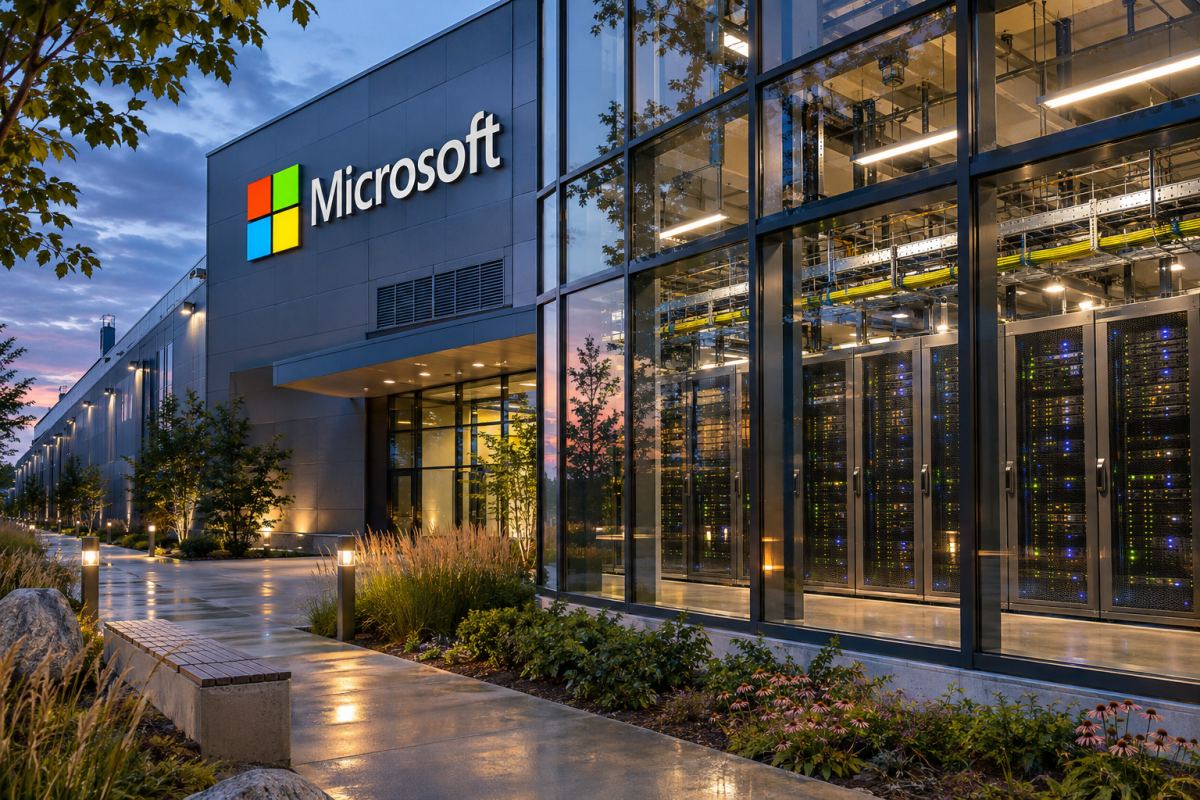
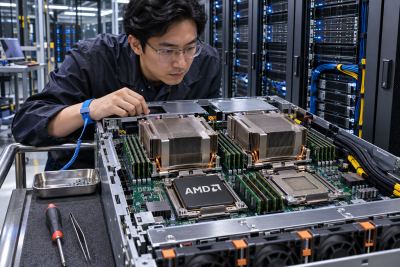
Microsoft's latest transformation is visible in a line of its cash flow statement. In the year ended June 30, 2026, it spent $115.948 billion in cash on additions to property and equipment, compared with $64.551 billion a year earlier. A company famous for software is committing extraordinary sums to the physical infrastructure needed to deliver computing and artificial intelligence.
The software business has not disappeared. It supplies the relationships and recurring revenue that make the investment possible. Microsoft generated $331.839 billion in fiscal 2026 revenue and $133.749 billion in GAAP net income. At the November 5 reference snapshot, its shares traded around $535.93 and its market value was roughly $3.979 trillion. The central question is how effectively it can combine its established position in work with an increasingly expensive computing platform.
The business that grew with the personal computer
Bill Gates and Paul Allen founded Microsoft in 1975. Their early Altair BASIC software belonged to a young computing market in which machines needed programs before they could become useful to more people. In his account of the company's fiftieth anniversary, Gates returned to that original code as the starting point of the business.
Microsoft's defining commercial insight was to supply software that other companies and users needed repeatedly. Its operating systems and productivity programs became part of how people worked with computers. A company choosing software was also choosing file formats, employee training, support arrangements and compatibility with customers and suppliers.
That accumulated familiarity became an important competitive asset. Replacing a work tool can involve much more than the price of a new license. A business must consider whether documents still work, staff can adapt, security policies remain effective and critical applications connect properly. Microsoft's position grew through those practical relationships as well as the capabilities of individual products.
The move toward subscriptions and cloud computing changed how that position produced revenue. Instead of purchasing software for a particular machine and waiting for a later upgrade, customers could pay for continuously updated services. Microsoft also gained a larger role in hosting the infrastructure on which other organizations run their applications.
Under chief executive Satya Nadella, the relationship between those businesses has become central. Productivity software brings Microsoft into everyday work; Azure supplies computing capacity; development tools and enterprise services connect it to the teams building the next generation of applications. The company has several routes to the same corporate customer.
Selling software and supplying the machines behind it
Microsoft's cloud opportunity reaches beyond renting servers. Customers buy storage, databases, security, analytics and tools for building and operating applications. Those services require physical infrastructure, but their commercial value also depends on software, reliability and the ability to manage complicated systems.
The company reported $214.4 billion in Microsoft Cloud revenue for fiscal 2026. That is an umbrella measure encompassing qualifying revenue across businesses, not a separate segment to add on top of total company sales. Confusing the two would count some of the same activity twice.
Microsoft still has other sources of revenue, including Windows, devices, gaming and advertising. This breadth gives it several ways to reach consumers and businesses. It also makes the accounts more demanding to read: a strong cloud result can coexist with weaker demand in a different product category.
The latest quarter illustrates the change in scale. Revenue in the first quarter of fiscal 2027, ended September 30, 2026, was $92.279 billion, up 19% from a year earlier. Operating income reached $45.915 billion. Microsoft Cloud revenue was $63.9 billion, while Azure revenue grew 48% as reported.
Readers comparing segment tables must also notice a structural change. Microsoft reorganized its reporting into Agents and Infra, and Devices and Consumer, for fiscal 2027. The September-quarter release presented prior-year comparisons on the new basis. It would be misleading to place those numbers beside the old segment names as if the categories had remained unchanged.
The company reported $677 billion in commercial remaining performance obligations. This measure captures contracted revenue expected to be recognized in future periods under the company's accounting policies. It indicates substantial commitments, but it is not cash already received or revenue earned in the latest quarter. Timing matters when evaluating such a large backlog.
A profitable company becoming more capital intensive
Fiscal 2026 revenue rose 18% from $281.724 billion. Operating income increased to $155.237 billion from $128.528 billion. These figures show the earnings strength of the underlying businesses before financing, taxes and other items affecting the final net result.
GAAP net income increased 31% to $133.749 billion, with diluted earnings of $17.95 per share. Microsoft also reported adjusted net income of $128.786 billion after excluding net gains associated with its OpenAI investment. The adjusted number was lower, an important reminder that an adjustment does not always make a company's profit look larger.
The distinction remained relevant in the latest quarter. September-quarter GAAP net income rose 32% to $36.629 billion, while the company's adjusted measure rose 18% to $36.422 billion. Different OpenAI-related effects in the two comparison periods help explain why those growth rates diverged. Operating performance and investment accounting deserve separate attention.
The balance sheet shows the physical expansion. Total assets reached $758.376 billion at June 30, compared with $619.003 billion a year earlier. Net property and equipment rose to $313.076 billion from $204.966 billion. Buildings, computing equipment and related infrastructure now occupy a much larger place in the company's recorded resources.
Cash and cash equivalents of $20.935 billion, together with $55.908 billion in short-term investments, provided approximately $76.8 billion across those categories. The $115.948 billion cash expenditure on property and equipment is a specific cash flow measure; it should not be confused with an investment figure that also includes assets acquired under financing arrangements.
These investments create a different economic rhythm from selling another copy of established software. Infrastructure must be built, powered and maintained. Equipment is depreciated over its useful life, affecting future earnings even after the initial cash payment. Capacity that attracts profitable workloads can strengthen the platform; capacity that earns too little can depress returns.
Why dominance does not remove execution risk
Microsoft's reach makes it an attractive supplier for organizations seeking fewer systems to manage. The same breadth attracts scrutiny from customers and competition authorities concerned about bundling and access. In 2025, the company entered European Commission commitments concerning Teams and Microsoft 365, including product choice and interoperability. Distribution advantages remain subject to legal and commercial constraints.
Security is another fundamental exposure. Customers entrust Microsoft with communications, identities, applications and data. Reliability and protection are part of what they buy. Failures can damage confidence across several products at once, making security an operating requirement for the entire business rather than a feature belonging to one service.
Artificial intelligence intensifies competition for both customers and resources. Other large cloud platforms compete for workloads, while customers can experiment with different models and software providers. Microsoft must show that its AI tools save time or create useful output worth paying for. A demonstration can attract interest; a durable business requires repeated use at sustainable economics.
Its investment cycle also depends on electricity, construction, advanced chips and deployment schedules. Those constraints sit outside the traditional image of a software company. They help explain why a growing order book and high demand do not automatically translate into immediately available capacity or higher returns on every new dollar invested.
The reliability question became more tangible on November 12, when a widespread Microsoft 365 outage disrupted services including Outlook, Teams and Copilot in multiple countries. Microsoft said the affected services were fully restored by November 14. Its preliminary explanation pointed to an issue during an earlier network-capacity upgrade that surfaced after a subsequent network change; the company said it had found no indication of malicious activity. A U.S. federal court in New York warned that the disruption had affected access to email and the ability to send and receive messages. The episode does not establish a financial cost for Microsoft, but it shows why service continuity is part of what customers purchase when they rely on its shared infrastructure.
The expectations inside the share price
Microsoft trades on Nasdaq under MSFT. Dividing the November 5 reference market value by fiscal 2026 GAAP net income gives an approximate trailing earnings multiple of 30. Because that profit includes investment effects, the figure needs interpretation alongside operating income and cash generation. It is a dated valuation comparison, not an estimate of future returns.
The company returned $10.2 billion through dividends and repurchases in the September quarter. Shareholder distributions and infrastructure investment can coexist because of the scale of the established business. The harder task is making the new investment productive enough to preserve that flexibility over time.
Microsoft's history is a succession of ways to make computing useful at work. Its current wager combines software distribution with ownership of vast computing resources. For readers following the company, the revealing question is whether revenue, useful customer adoption and returns on infrastructure advance together. That relationship will say more about the next Microsoft than any single announcement of a new AI feature.